Which Hardwood Is Best for Stair Treads?
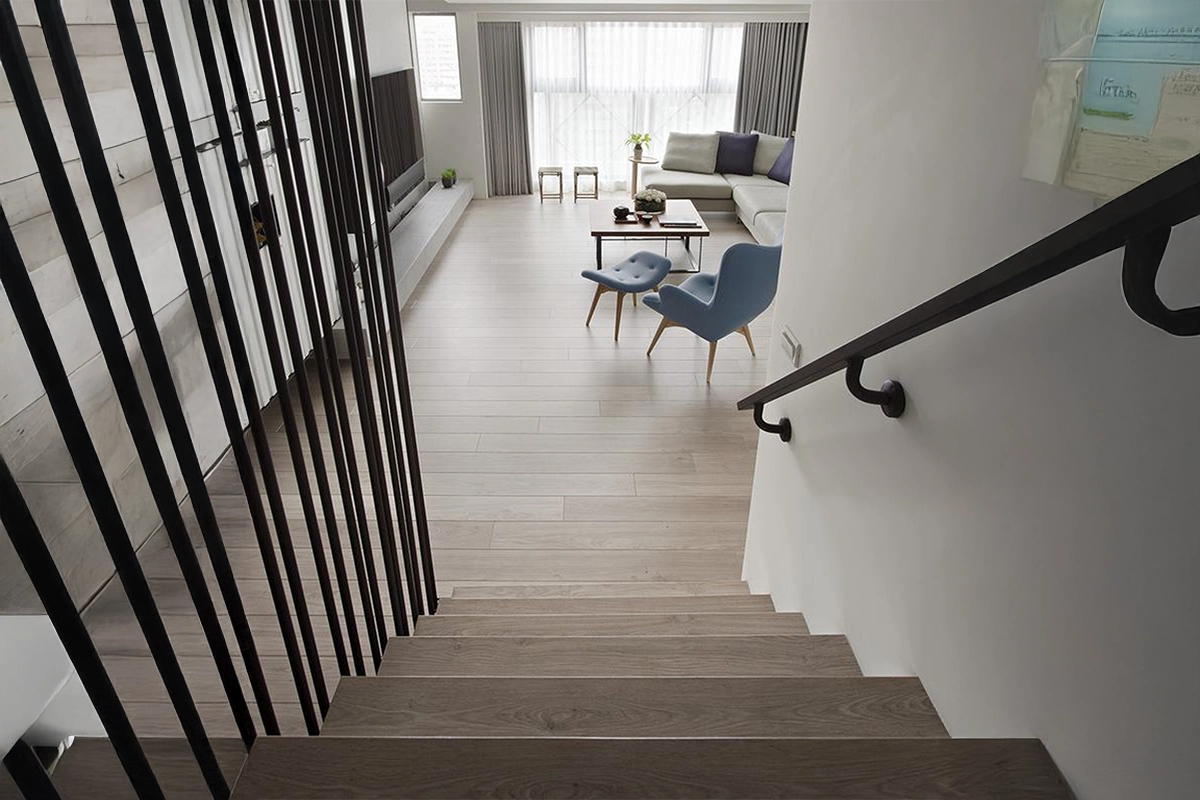
In the high-performance environment of a modern Australian home, the staircase is not just a transition; it is a structural hero. It bears the weight of every morning rush, every heavy furniture move, and the rhythmic beat of daily life. When selecting the material for this crucial element, the choice almost always gravitates toward timber but not all timber is created equal.
Choosing the right hardwood for stair treads requires balancing four critical pillars: density, dimensional stability, aesthetic longevity, and durability classification. Whether you are designing a sleek internal floating flight or rugged external hardwood stair treads, this guide serves as your technical blueprint for selecting the perfect species.
The Four Pillars of Tread Performance
Before comparing specific species, a homeowner must understand the metrics that define a “good” tread. In 2025, the industry has standardized these factors to help you cut through the marketing jargon.
1. Janka Hardness
The Janka rating measures the force required to embed a steel ball into the wood. For a staircase, you want a timber that resists the focused pressure of high heels and the impact of dropped objects.
- Target: For high-traffic internal stairs, aim for a Janka rating above $8.0 \text{kN}$.
2. Durability Class
Durability classes (1 through 4) indicate how well a timber resists rot and termites.
- Target: For external hardwood stair treads, only specify Class 1 or Class 2.
3. Dimensional Stability
This refers to how much the wood “breathes” (expands or contracts) with humidity. High movement leads to squeaky steps and gapping.
4. Slip Resistance
Safety is paramount. The grain texture of the wood determines how well it holds a finish and provides traction.
The Decision Matrix: Species Comparison
To simplify your selection, we have categorized the most popular Australian hardwoods based on their ideal application and structural strengths.
1. Spotted Gum: The High-Traffic Workhorse
Spotted Gum is arguably the most popular choice for hardwood treads for stairs in 2025.
- Janka Rating:$\approx 11.0 \text{ kN}$
- Durability: Class 1 (Above Ground)
- Visuals: A “kaleidoscope” of browns, creams, and greys with a unique wavy grain.
- Best For: Busy family homes and coastal builds. Its natural “greasiness” makes it incredibly moisture-resistant.
2. Ironbark: The Indestructible Choice
If you are building for a century, Ironbark is the undisputed king of hardwood stair treads.
- Janka Rating:$\approx 14.0 \text{ kN}$
- Durability: Class 1
- Visuals: Deep reds to chocolate browns.
- Best For: Heavy-duty applications and homes in high-risk fire zones (BAL-29 and above). It is so dense it is notoriously difficult to cut, but it is virtually dent-proof.
3. Blackbutt: The Coastal Architect’s Favorite
Blackbutt offers a neutral, modern palette that suits the “Scandi-Coastal” aesthetic perfectly.
- Janka Rating:$\approx 9.1 \text{ kN}$
- Durability: Class 2
- Visuals: Even, pale straw to golden honey tones.
- Best For: Light-filled, minimalist interiors. It provides excellent stability and is one of the more fire-resistant species available.
4. Jarrah: The Heritage Powerhouse
For those seeking stair treads for hardwood stairs with a classic, luxurious feel, Jarrah remains the gold standard in Western Australia and beyond.
- Janka Rating:$\approx 8.5 \text{ kN}$
- Durability: Class 2
- Visuals: Rich, deep reddish-browns that darken over time into a magnificent patina.
- Best For: Traditional or rustic-luxe interiors where the staircase is intended to be the central design statement.
Internal vs. External: The Technical Split
The environment dictates the species. You cannot simply use an internal-grade timber for an outdoor flight without risking structural failure within five years.
Choosing for the Indoors
When selecting hardwood for stair treads inside the home, the primary concerns are aesthetics and noise.
- Stability is Key: Kiln-dried timbers are essential to prevent the wood from shrinking and creating “squeaks.”
- Refinishability: Solid hardwood allows you to sand and reseal the steps every 10–15 years, essentially resetting the clock on your interior design.
Choosing for the Outdoors
External hardwood stair treads face the relentless Australian sun and rain.
- Anti-Slip Grooves: Outdoor treads should feature machined “reeded” or grooved surfaces to ensure traction during wet weather.
- Tannin Leaching: Be aware that species like Merbau and Spotted Gum can “bleed” tannins when wet. Ensure they are pre-sealed or installed where the run-off won’t stain expensive pavers.
2025 Installation Standards: Ensuring a Silent Staircase
Even the best timber will fail if installed poorly. Modern installation techniques for stair treads for hardwood stairs focus on “chemical bonding” alongside mechanical fixings.
- The Zig-Zag Adhesive Method: Use a high-quality polyurethane construction adhesive in a zig-zag pattern on the stringer before laying the tread. This acts as a gasket, preventing wood-on-wood friction (the source of squeaks).
- Pilot Holes: High-density hardwoods like Ironbark or Spotted Gum will split if you drive a nail or screw directly into the end grain. Always pre-drill pilot holes.
- The “27 Rule”: For a comfortable walk, the riser height plus the tread depth should equal approximately $27 \text{ inches}$ ($685 \text{ mm}$). This ensures the human gait remains natural.
Maintaining the Lustre
Timber is a living material. To protect your investment:
- Internal: Sweep daily. Dirt acts like sandpaper on your finish. Use a damp (not soaking) microfiber mop with a pH-neutral wood cleaner.
- External: Re-oil your external hardwood stair treads every 12 months. This prevents the wood from “checking” (developing small surface cracks) due to UV exposure.
Frequently Asked Questions (FAQ)
1. What is the most durable hardwood for internal stairs?
For pure impact resistance, Ironbark and Spotted Gum are the most durable. Their high Janka ratings mean they resist dents from pets, children, and heavy footwear far better than softer hardwoods like Tasmanian Oak or imported European Oak.
2. Can I use the same hardwood for both my floors and my stair treads?
Yes, and it is highly recommended for design continuity. Most Australian suppliers provide stair treads for hardwood stairs in the same species as standard flooring planks, allowing for a seamless transition from the hallway to the upper level.
3. Why are my external hardwood stair treads turning grey?
This is a natural process called “silvering,” caused by UV exposure. If you prefer the original rich color of the wood, you must apply a pigmented timber oil. If you enjoy the weathered look, you can leave them to silver, though a clear sealer is still recommended to prevent moisture from causing structural cracks.
4. Is it better to buy pre-finished or raw hardwood treads?
Pre-finished hardwood stair treads save time and ensure a factory-consistent coating. However, raw treads allow you to custom-match the stain to other elements in your home and ensure that the “nosing” is finished perfectly after installation.
5. How thick should a hardwood stair tread be?
In Australia, the standard thickness for a solid timber tread is usually between $30 \text{ mm}$ and $42 \text{ mm}$. Thicker treads (up to $50 \text{ mm}$+) are often used for “floating” or “cantilevered” designs to ensure there is zero flex when stepped on.