Complete Guide to Selecting Stair Treads for Hardwood Stairs
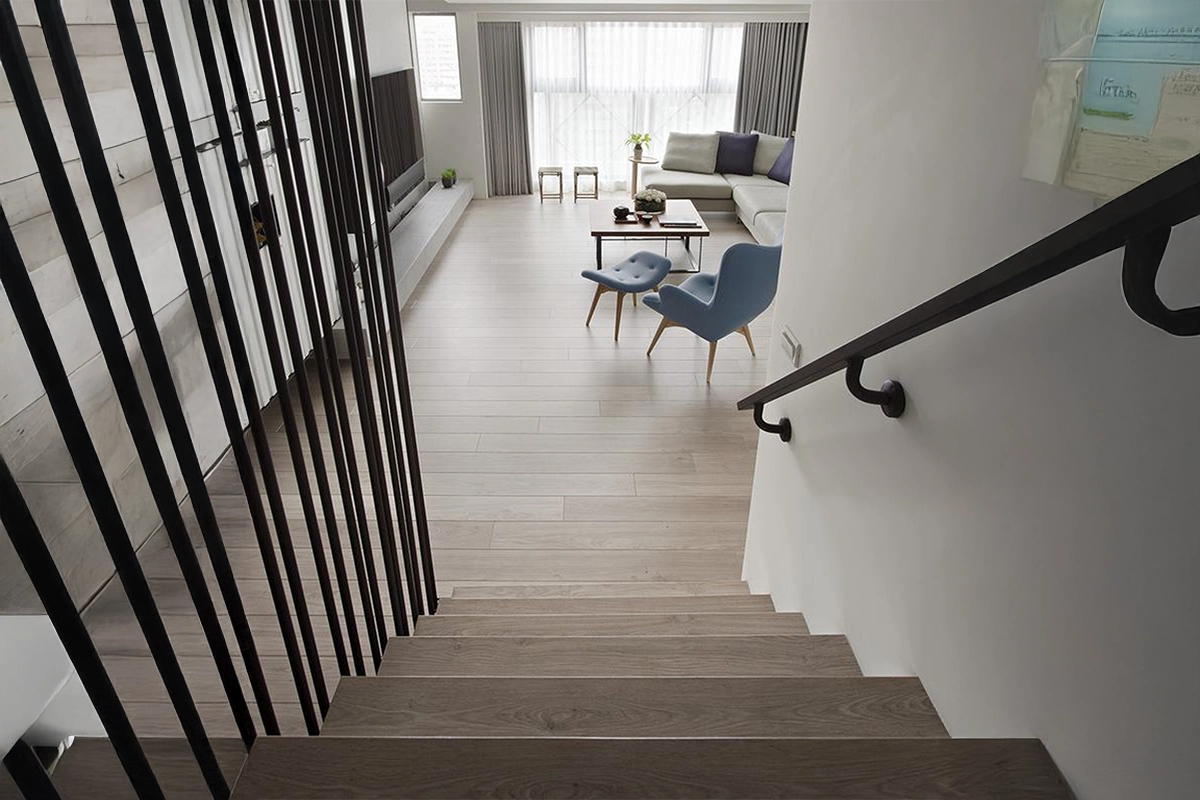
In the modern home, the staircase is more than just a functional bridge between levels; it is a vertical sanctuary that defines the architectural rhythm of a space. It is a structure that demands a rare trifecta of properties: immense structural strength, tactile warmth, and an aesthetic that can anchor an entire interior design scheme.
Selecting the right stair treads for hardwood stairs is an exercise in both engineering and artistry. Because the staircase is the most heavily trafficked surface in any dwelling, the materials chosen must be capable of withstanding hundreds of thousands of footsteps over their lifespan. This guide serves as a comprehensive roadmap for the discerning homeowner, navigating the complexities of species selection, environmental challenges, and the technical nuances of hardwood stair treads.
The Material Science of the Step
Before a single board is milled, we must understand the “physics of the footstep.” Every time a person ascends or descends a staircase, they exert a concentrated force on the front edge of the tread. To resist this force without indenting, splitting, or wearing down, the timber must possess a high degree of density.
The Janka Hardness Scale
In the world of timber, we measure a wood’s resistance to impact through the Janka Hardness Test. This involves measuring the force required to embed a$11.28 \text{mm}$ steel ball halfway into the wood sample.
When selecting hardwood for stair treads, you should generally aim for a Janka rating above $8.0 \text{kN}$ for internal use and even higher for commercial or external applications. A higher rating ensures that the grain remains compact under the pressure of high-heeled shoes or the impact of dropped household items.
Grain Direction and Stability
Hardwood is a living, hygroscopic material it expands and contracts based on the humidity of its surroundings. The way the timber is “cut” from the log (Quarter-sawn vs. Back-sawn) significantly impacts how much the hardwood treads for stairs will move. For stairs, stability is paramount; a tread that warps or “cups” creates an uneven surface that can become a trip hazard and lead to structural squeaks.
Anatomy of a High-Performance Staircase
To choose the right components, one must understand how a staircase is built. The “tread” is the horizontal part you step on, while the “riser” is the vertical part between steps.
The Importance of the Nosing
The “nosing” is the front edge of the tread that overhangs the riser. This is the most vulnerable part of any staircase. When selecting hardwood stair treads, the profile of the nosing whether it is a traditional “Bullnose” (rounded), a “Pencil Round” (slightly curved), or a “Square Edge” (modern and crisp) must be chosen based on both safety and design. A square edge offers a modern, minimalist look but requires a harder timber species to ensure the sharp corner doesn’t chip over time.
Thickness and Structural Spans
In Australian residential construction, the standard thickness for a solid hardwood stair tread is typically $32 \text{mm}$ or $42 \text{mm}$.
- 32mm Treads: Ideal for traditional “housed” staircases where the timber is supported by a stringer on both sides.
- 42mm Treads: Often specified for “floating” or “open-rise” staircases, where the added thickness provides the necessary stiffness to prevent “flexing” when a person walks in the center of the step.
The Species Spotlight – Finding Your Match
Australia is home to some of the finest hardwoods on the planet. Here is a breakdown of the species most suited for hardwood for stair treads:
1. Spotted Gum (The All-Rounder)
Spotted Gum is a quintessential Australian choice. With a Janka rating of approximately $11.0 \text{kN}$, it is incredibly hard. Its visual appeal lies in its “kaleidoscope” of colors ranging from pale straw to deep chocolate browns with hints of olive. It is naturally greasy, which helps it resist moisture, making it a favorite for both internal and external hardwood stair treads.
2. Blackbutt (The Architect’s Muse)
If your home follows a “Scandi-Coastal” or minimalist aesthetic, Blackbutt is the premier selection. It provides a consistent, pale-to-honey blonde tone that brightens a space. It is highly stable and features an even grain, making it an excellent canvas for modern matte finishes.
3. Ironbark (The Titan)
For those who prioritize raw durability above all else, Ironbark is the undisputed king. With a Janka rating that can exceed $14.0 \text{kN}$, it is one of the densest timbers commercially available. It is heavy, fire-resistant, and virtually impossible to dent, making it the perfect choice for high-traffic “forever homes.”
4. Jarrah (The Heritage Choice)
Jarrah is a Western Australian icon. Its deep reddish-brown tones add a sense of luxury and permanence to a home. While slightly softer than Spotted Gum, it remains a robust choice for hardwood treads for stairs, offering a “grounded” feel and a rich patina that improves with age.
Beyond the Door – External Hardwood Stair Treads
External staircases face a set of challenges that internal stairs never encounter: UV radiation, fungal attacks, and extreme moisture cycling. When choosing external hardwood stair treads, the durability classification of the timber is the most critical metric.
Durability Classes 1 & 2
Timber for external use is rated from Class 1 (highest) to Class 4. For an outdoor staircase, you should only ever specify Class 1 or Class 2 hardwoods. These timbers possess natural tannins and oils that act as biological barriers against rot and termites.
Safety and Slip Resistance
Wet outdoor stairs can be incredibly dangerous. Modern external hardwood stair treads often incorporate “anti-slip” features. This can be achieved through:
- Reeded (Grooved) Surfaces: Small channels machined into the wood to provide grip.
- Anti-Slip Inserts: Metal or carborundum strips recessed into the front edge of the tread.
- Wire Brushing: A mechanical process that removes the softer wood fibers, leaving a textured, grippy surface.
Installation and Finish – The Professional Touch
Even the most expensive stair treads for hardwood stairs will fail if installed incorrectly. A professional installation focuses on “silent strength.”
Avoiding the Squeak
The classic “staircase squeak” is caused by friction timber rubbing against timber or a nail. To prevent this, modern installers use a high-performance polyurethane adhesive in combination with mechanical fixings. The adhesive acts as a permanent, flexible gasket that absorbs movement and sound.
Selecting the Right Finish
The finish you choose determines how the wood will age.
- Polyurethane: Provides a hard, protective plastic-like coating. It is easy to clean but can be difficult to spot-repair if scratched.
- Hardwax Oils: Penetrate the wood fibers, leaving a natural, “matte” feel. These are excellent because they can be spot-repaired without sanding the entire staircase.
- Anti-Slip Coatings: For safety, ensure the finish has an R10 or P3 slip rating, especially on the front edge of the treads.
A Sound Investment
Choosing hardwood stair treads is a commitment to the long-term value and safety of your home. By selecting a high-density species like Spotted Gum or Blackbutt, ensuring the correct thickness for your structural span, and prioritizing the needs of the environment, you create a structure that is both a functional necessity and a timeless piece of art. Hardwood stairs are one of the few elements in a home that don’t just “last” they age gracefully, developing a story with every footstep.
Frequently Asked Questions (FAQ)
1. Can I use the same hardwood for my treads and my risers?
Absolutely. Many homeowners choose to use the same species for both the hardwood treads for stairs and the risers for a seamless, “solid wood” look. However, a popular modern trend is to use hardwood treads with white-painted MDF risers to create a high-contrast, contemporary appearance.
2. How thick should my stair treads be for a floating staircase?
For floating or cantilevered stairs, thickness is key to preventing a “bouncing” sensation. Most engineers recommend a minimum of $42 \text{mm}$ to $50 \text{mm}$ for solid hardwood stair treads in these designs to ensure maximum rigidity.
3. Why are my external hardwood stair treads turning grey?
This is a natural process called “silvering,” caused by the UV rays from the sun breaking down the lignin in the wood. To maintain the original rich color of the timber, you must apply a pigmented timber oil every 12 months. If you prefer the weathered look, you can leave them to silver, though a clear sealer is still recommended to protect against water penetration.
4. Is it possible to install hardwood treads over existing concrete stairs?
Yes. This is a common renovation technique. You can bond $19 \text{mm}$ or $32 \text{mm}$stair treads for hardwood stairs directly onto a level concrete slab using a high-strength flooring adhesive. This is an excellent way to upgrade the look of a home without a full structural rebuild.
5. What is the most durable hardwood species for stairs in Australia?
For raw impact resistance and longevity, Ironbark and Spotted Gum are considered the most durable. Both have exceptionally high Janka ratings and are Class 1 durability timbers, making them nearly immune to the daily wear and tear of a busy household.