The Flooring Manifesto: A Biological and Structural Face-Off
The quest for the ideal floor is frequently presented as a choice between engineered timber and solid hardwood. One is genuine, and the other is stable, according to marketing brochures. However, in the reality of 2026 architecture, the intersection of your local humidity index, the moisture content of your subfloor, and your long-term maintenance relationship will determine which option is best.
This isn’t just a comparison; it’s a structural audit. We are going to deconstruct these two titans of the industry through the lens of physics, aesthetics, and the specific demands of the Australian lifestyle, ranging from the high-gloss interiors of Sydney to the rugged, sun-drenched jarrah decking perth residents have made a cultural staple.
Part I: The Anatomy of the Plank
To understand why one floor fails while another thrives, we have to look at their cross-sections. This is where the physics of cupping and crowning is either invited in or locked out.
The Solid Hardwood Purist
A solid hardwood plank is exactly what it sounds like: a single, homogenous piece of timber from top to bottom. If you choose a jarrah deck, you are standing on a solid piece of Eucalyptus marginata.
The primary challenge here is Anisotropy. Timber does not expand equally in all directions. When moisture changes, a solid plank moves at different rates across its radial, tangential, and longitudinal axes. We can express the potential for movement through the Shrinkage Coefficient ($S$):
$$\Delta D = D_i \times S \times \Delta MC$$
Where:
- $\Delta D$ = Change in dimension
- $D_i$ = Initial dimension
- $S$ = Shrinkage coefficient (unique to the species)
- $\Delta MC$ = Change in moisture content
Solid hardwood is reactive. It is a living material that breathes with your house.
The Engineered Strategist
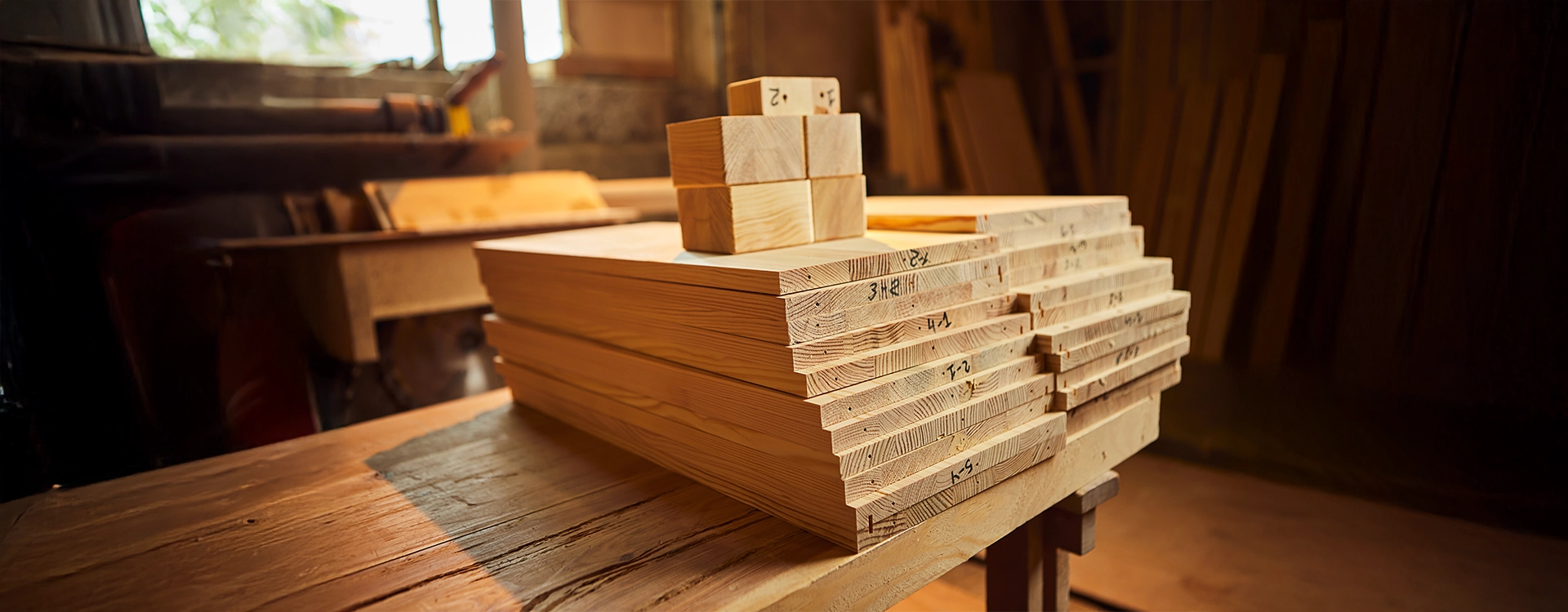
Engineered flooring is an exercise in structural counter-balancing. It consists of a thin wear layer (lamella) of real hardwood bonded to a multi-layered core of plywood or hevea. The grain of each layer is oriented perpendicular to the one above it.
This cross-lamination creates mechanical restraint. When the top layer wants to expand due to humidity, the layers beneath it-oriented in the opposite direction-physically prevent that movement. This is why engineered floors are the gold standard for high-rise apartments and homes with underfloor heating.
Part II: The Jarrah Factor – A Case Study in Durability
When we talk about premium Australian timber, we eventually arrive at Jarrah. Indigenous to the southwest of Western Australia, it is one of the few timbers that can bridge the gap between indoor luxury and outdoor resilience.
The Indoor/Outdoor Flow
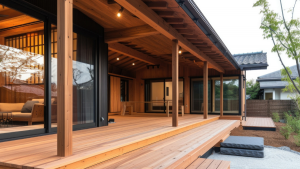
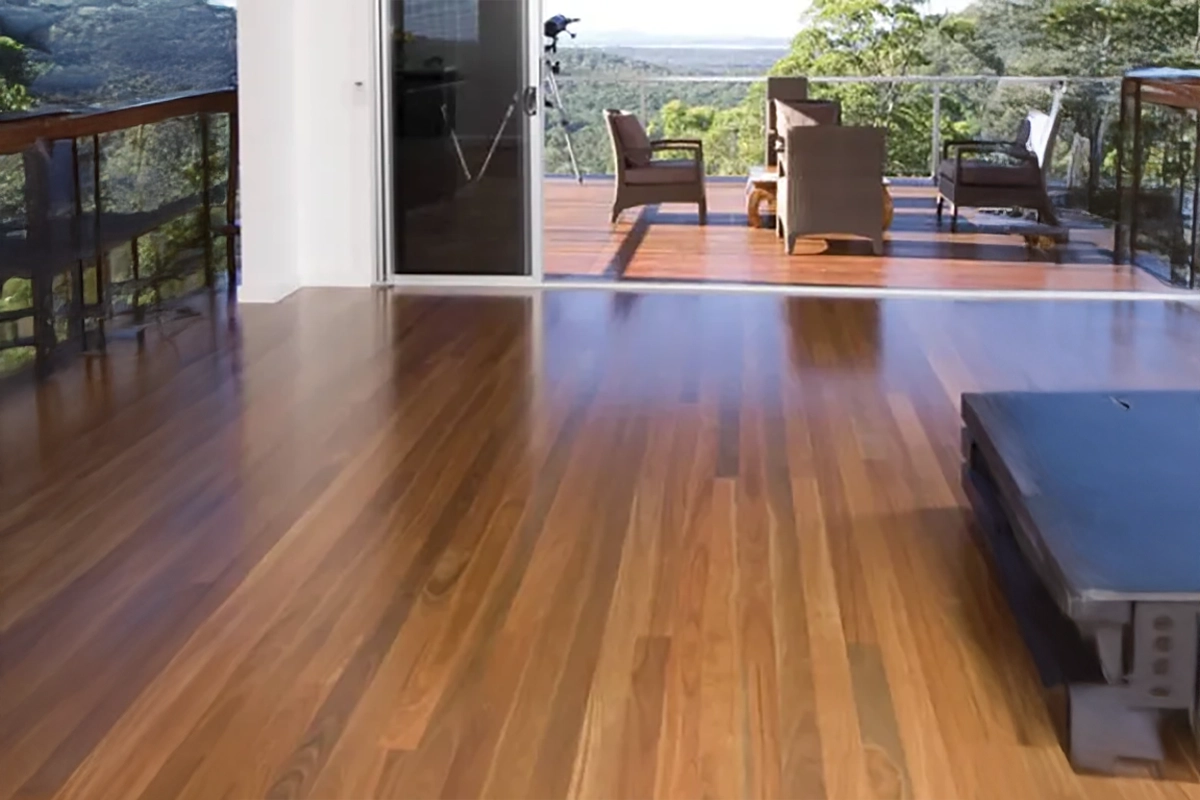
In modern Australian design, the seamless transition is king. Homeowners often want their internal flooring to lead directly onto a jarrah timber decking area.
- Indoors: You might use a solid Jarrah plank for its deep burgundy tones and a Janka hardness of $8.5\text{kN}$.
- Outdoors: The jarrah deck takes over. Because Jarrah is a Class 2 durability timber, it resists rot and termites without the need for the heavy chemical treatments required by softwoods.
For those in the West, jarrah decking perth is more than a choice; it’s a regional signature. The timber’s ability to withstand the harsh UV index of the Swan Coastal Plain while maintaining structural integrity is why it remains the premier choice for jarrah decking across the state.
Part III: The Lifecycle Argument
The most common argument in favor of solid hardwood is Longevity. There is a romantic notion that a solid floor can be sanded back every decade for a hundred years.
The “Wear Layer” Reality
While it’s true that a solid plank is $19\text{mm}$ thick, you can only sand it down to the tongue of the join, which usually leaves you with about $6\text{mm}$ to $8\text{mm}$ of usable wood.
High-quality engineered floors often come with a $4\text{mm}$ to $6\text{mm}$ wear layer.
- Solid Hardwood:$\approx 4\text{ to }6$ professional sandings.
- Engineered (Premium):$\approx 2\text{ to }3$ professional sandings.
In 2026, we have to ask: Will you really sand your floor more than twice in your lifetime? For most homeowners, the stability of engineered timber outweighs the hypothetical 80-year lifespan of solid wood.
Environmental Footprint
Engineered flooring is arguably more timber-efficient. One cubic meter of raw Jarrah can produce significantly more square meters of engineered flooring than solid jarrah timber decking. By using fast-growing plantation timbers for the core and reserving the slow-growing Jarrah for the visible surface, we maximize the utility of our native forests.
Part IV: Environmental Constraints – When Your Space Decides for You
You might love the idea of solid hardwood, but your house might have other plans. Here is the decision matrix for 2026:
1. The Concrete Slab
If you are building on a concrete slab (common in new Australian builds), engineered flooring is the undisputed winner. It can be “floated” on an underlay or glued directly. Solid hardwood usually requires a plywood sub-floor or battens, which adds height and significant cost to your project.
2. Underfloor Heating
Do not put solid hardwood over underfloor heating. The constant cycling of heat ($25\text{°C}$ to $30\text{°C}$) directly beneath the wood will drive out moisture too rapidly, leading to gaps, splits, and catastrophic cupping. Engineered timber’s multi-ply core is designed to handle this thermal stress.
3. Coastal Locations
If your home is near the ocean, your internal humidity will fluctuate wildly. Solid hardwood in a Bayside home requires a master installer who understands expansion gaps at an expert level. For a lower-risk installation, engineered boards provide the peace of mind that your floor won’t buckle after a particularly humid summer.
Part V: The Aesthetic and Tactile Experience
There is a psychological component to flooring. How does it sound when you walk on it? How does it feel underfoot?
- The Sound of Solid: A solid floor, when nailed to battens, has a specific thud. It feels permanent. It doesn’t have the hollow sound sometimes associated with poorly installed floating engineered floors.
- The Feel of Engineered: Modern engineered floors are indistinguishable from solid wood to the naked eye. Because the top layer is real wood, you get the same warmth and grain texture. If you choose a “glue-down” installation for your engineered floor, you eliminate the “bounce” and achieve the same acoustic profile as solid timber.
The “Better” floor isn’t found in a catalog; it’s found in your site conditions.
- Choose Solid Hardwood if you are a traditionalist building a forever home on a traditional stump-and-bearer sub-floor, or if you are installing a high-impact jarrah deck that needs to withstand the brutal Australian sun and heavy foot traffic.
- Choose Engineered Hardwood if you live in an apartment, have a concrete slab, plan on installing underfloor heating, or want a wider board ($180\text{mm}+$) that would be too unstable in a solid format.
Ultimately, whether you are admiring the deep reds of your internal flooring or the weathered grace of your jarrah timber decking, the key to performance is the quality of the timber and the precision of the installation.
Frequently Asked Questions (FAQ)
1. Is an engineered floor fake wood?
Absolutely not. The surface layer (the wear layer) is $100\%$ genuine hardwood. When you look at an engineered floor, you are seeing the same jarrah deck timber or Oak that you would see in a solid plank. The only non-hardwood part is the structural core hidden beneath the surface.
2. Why is jarrah decking perth so specific about the species?
Perth’s climate is unique, extremely dry summers followed by wet winters. Jarrah is endemic to the region, meaning it has evolved to thrive in this specific soil and air. A jarrah deck in Perth will often outlast imported timbers because it is biologically at home.
3. Can I use engineered flooring for my outdoor jarrah deck?
No. Engineered flooring is strictly for indoor use. The adhesives and plywood cores used in engineered products are not designed to withstand direct rain or the intense UV levels of an outdoor jarrah deck. For outdoors, always stick to solid jarrah timber decking.
4. Which is more expensive: Solid or Engineered?
In 2026, the prices are often comparable. While the raw material for engineered flooring is sometimes cheaper, the complex manufacturing process offsets that saving. However, engineered flooring is almost always cheaper to install because it can be laid faster and requires less sub-floor preparation.
5. Does a solid jarrah deck increase home value more than an engineered?
In the Australian market, Real Timber is a major value-add. Both solid and premium engineered floors are considered high-end. Buyers generally value the species and the condition of the floor more than whether the core is solid or plywood.