The Ultimate Guide to Structural Timber in Melbourne: MGP10 vs. LVL F17
Building a sturdy, safe, and compliant structure—whether it’s a new deck, a load-bearing wall, or a roof frame—starts with the right foundation. In Melbourne’s dynamic construction market, two names dominate the conversation for high-performance structural framing: MGP10 and LVL F17 . Choosing between these materials requires a deep understanding of their properties, costs, and suitability for different applications
This comprehensive guide is designed to clarify the differences between MGP10 timber and lvl structural timber, helping builders, renovators, and DIY enthusiasts in Melbourne make informed decisions that guarantee structural integrity and long-term value for their projects.
Understanding Structural Timber Grading
Before diving into the specifics of MGP10 and LVL F17, it’s essential to understand how structural timber is rated. Timber strength is classified based on its Modulus of Elasticity (a measure of stiffness) and bending strength (a measure of load-bearing capacity).
- MGP (Machine Graded Pine): This grading system applies specifically to radiata pine. The number (e.g., 10, 12, 15) indicates the minimum bending strength in megapascals (MPa). MGP10 is the most common and versatile grade used in residential construction across Melbourne.
- F-Grade (Stress Grade): This is the traditional stress grading system used for both natural hardwoods and engineered wood products like LVL. The number (e.g., F5, F14, F17) indicates the bending strength category. F17 is recognized as a high-strength structural grade.
MGP10: The Workhorse of Residential Framing
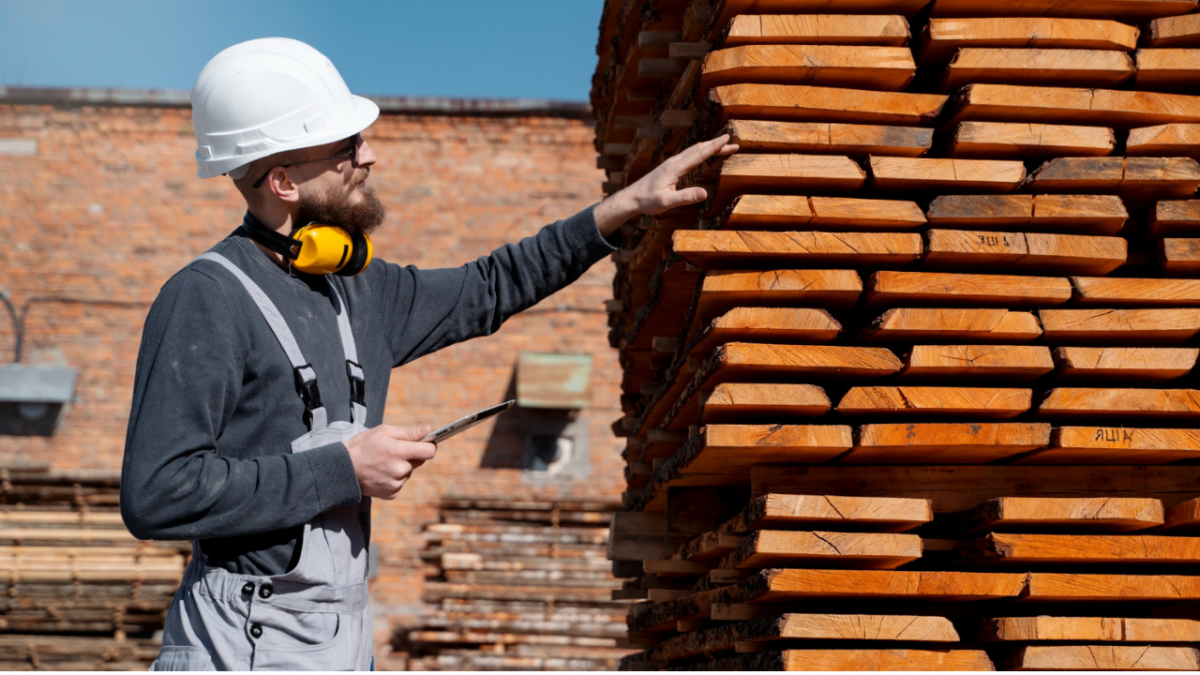
MGP10 is a machine-graded pine that has been stress-tested to meet specific structural requirements. It is, by far, the most common framing material used in standard housing construction throughout Melbourne and Victoria.
Key Characteristics of MGP10 Timber
- Material: Usually sourced from plantation Radiata Pine, making it an environmentally sustainable and locally sourced option.
- Strength Rating: Rated for a characteristic bending strength of 10 MPa. This strength is perfectly adequate for standard, non-complex residential load-bearing walls, floor joists, and rafters.
- Common Dimensions: MGP10 is readily available in a vast array of common sizes, such as 90×45 mgp10, $70 \text{mm} \times 35 \text{mm}$, and $140 \text{mm} \times 45 \text{mm}$.
- Treatment: In Melbourne, MGP10 used for external or hazard zone applications (like deck substructures or bottom plates) is often chemically treated (e.g., H2F for termite protection or H3 for external exposure).
Advantages of MGP10
- Cost-Effectiveness: MGP10 is significantly more affordable than high-grade engineered timber, making it the default choice for budget-conscious projects.
- Ease of Use: As a natural timber, MGP10 is light, easy to cut, nail, and handle on-site, speeding up construction time.
- Widespread Availability: Every timber yard and major hardware store in Melbourne stocks MGP10 in volume, ensuring rapid access for projects of any size.
Limitations of MGP10
- Deflection and Span: For long spans (e.g., large open-plan areas, main bearers for a deck), MGP10 may require larger dimensions or closer spacing to meet deflection limits compared to LVL.
- Inconsistencies: Being a natural product, despite machine grading, there can be minor variations in the size, straightness, and moisture content between pieces.
MGP10: The Workhorse of Residential Framing
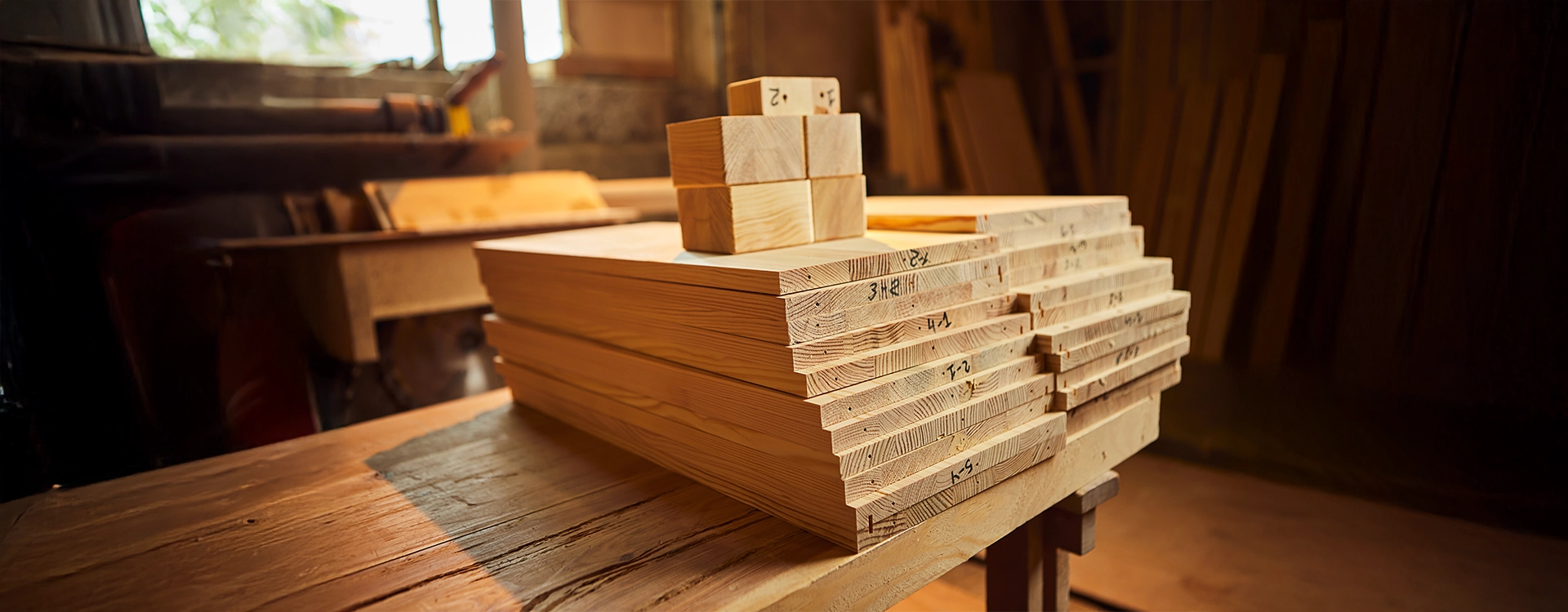
LVL (Laminated Veneer Lumber) is an engineered wood product made by peeling thin layers of wood veneer, drying them, coating them with a structural adhesive, and pressing them together under high heat. The layers are typically pressed with the grain running in the same direction, creating an incredibly strong and uniform beam.
Key Characteristics of LVL F17
- Material: Primarily sourced from plantation softwoods, layered with high-strength resin.
- Strength Rating: LVL products are typically rated using the traditional F-grade system. LVL F17 indicates a superior stress grade, meaning it has a higher load-bearing capacity and stiffness than standard MGP grades.
- Uniformity: Because it is engineered, LVL is dimensionally precise, perfectly straight, and consistent in strength along its entire length—a massive advantage over natural timber.
- Long Spans: LVL is manufactured in extremely long, continuous lengths (often over 12 meters), making it ideal for large beams and cantilevers.
Advantages of LVL F17
- Superior Strength and Stiffness: F17 LVL beams can typically span longer distances and carry heavier loads than an equivalent size of MGP10, often reducing the size and number of support columns required.
- Dimensional Stability: LVL is incredibly resistant to twisting, bowing, shrinking, or swelling, guaranteeing a straighter, flatter frame, which is critical for wall alignment and flooring spotted gum installation.
- Efficiency in Design: Its high strength allows designers to specify smaller members for the same job, saving material volume and providing cleaner sight lines in the structure.
Limitations of LVL F17
- Cost: F17 LVL is significantly more expensive than MGP10. Its use is usually reserved for specific high-load or long-span applications.
- Handling:Due to the dense resin composition, LVL can be heavier and harder to cut than MGP10.
- Exposure: LVL is highly susceptible to moisture damage. Unless specifically treated (which adds cost), it must be kept dry and is generally unsuitable for exposed outdoor use like the exposed frame of a spotted gum deck.
The Structural Showdown: MGP10 vs. LVL F17
| Feature | MGP10 | LVL F17 |
| Bending Strength | Moderate (10 MPa) | High (F17 Grade) |
| Material Type | Natural Solid Pine | Engineered Veneer Laminate |
| Cost | Low (Most economical) | High (Premium material) |
| Spanning Capacity | Shorter spans, heavier loads require larger sizes. | Longer spans, can achieve the same span with smaller sizes. |
| Straightness | Good, but susceptible to minor warp/twist. | Excellent (Dimensionally stable and uniform). |
| Moisture Resistance | Available in H3 treatments for external use. | Must be kept dry; generally not for exterior exposure. |
| Best Application | Standard wall framing, basic floor joists, standard roof construction. | Main load-bearing beams, long-span floor systems, headers over wide openings. |
1. Standard Framing and Stud Walls
For most non-complex internal framing, standard studs, and minor structural elements, MGP10 is the practical and most economical choice. For example, a standard 90×45 mgp10 stud wall will be perfectly compliant and cost-effective.
2. Long Spans and High Loads
If your design features a wide, open-plan space, a heavy roof load, or a large deck bearer spanning more than 4 meters, LVL F17 is usually the superior choice. Its stiffness reduces bounce (deflection) and allows for a more elegant, smaller-profile beam compared to a massive, chunky MGP10 beam that might be needed to achieve the same span.
3. Deck Substructures
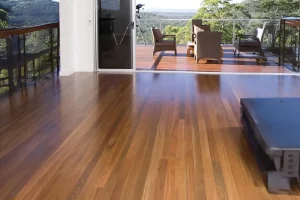
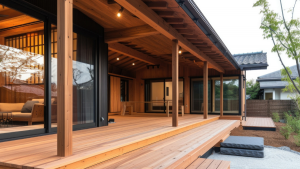
For a spotted gum deck substructure that is exposed to the weather (even under the boards), MGP10 that has been H3 or H4 treated (for external/ground contact) is the correct and necessary choice. LVL F17 should generally be avoided in exposed deck framing unless the specific product is engineered and treated for exterior use, which is rare and costly.
4. Cost-Benefit Analysis
Savvy builders in Melbourne often employ a hybrid approach:
- Use MGP10 for 80% of the project (stud walls, minor rafters).
- Use LVL F17 only for the critical 20% (main roof beams, garage door headers, long-span floor joists) where its superior performance justifies the higher cost.
Ultimately, all structural timber selection in Melbourne must comply with the National Construction Code (NCC) and Australian Standards. Always consult with a qualified engineer or building certifier to confirm that your chosen timber (whether it’s MGP10 or f17 level) meets the specific load requirements for your project.
Conclusion
Both MGP10 and LVL F17 are indispensable to modern Melbourne construction, each fulfilling distinct roles. MGP10 is the economical, versatile, and user-friendly choice for general framing, while F17 LVL is the high-performance engineer’s favorite, used to create the long spans and complex designs characteristic of modern Australian architecture. By understanding the stiffness, cost, and best application of each, you ensure your project is built to last, compliant, and optimised for both performance and budget.
Ready to transform your space with quality that lasts? Explore the range at Melbourne Timber Supplies—your go-to source for Hardwood Decking in Australia.
Frequently Asked Questions (FAQ)
-
Q. What does the “10” in MGP10 actually mean?
The “10” in MGP10 stands for 10 Megapascals (MPa), which is the minimum characteristic bending strength the timber is graded for. It is the most common structural grade for general residential framing in Melbourne. -
Q.Can I use LVL F17 for my deck substructure?
It is generally not recommended to use standard LVL structural timber for an exposed deck substructure. LVL must be kept dry and is susceptible to moisture damage. For decks, you must use H3-treated MGP10 timber or better (H4 for ground contact), which is specially treated for outdoor exposure. -
Q. How does LVL F17 save me money if it costs more than MGP10?
LVL F17 can save money by being stiffer. Its higher strength allows engineers to specify a smaller beam size or use fewer supporting posts for the same required span compared to a much larger MGP10 beam, saving on material volume and simplifying the foundational structure. -
Q. What is the most common size of MGP10 used for standard wall studs?
The most common size used in Melbourne for standard internal and external stud walls is 90×45 mgp10. The $90 \text{mm}$ depth is used for standard insulation cavities and door/window frames. -
Q. Is LVL F17 prone to shrinking or warping?
No. One of the main benefits of LVL structural timber is its exceptional dimensional stability. Because it is engineered with thin, layered veneers and structural adhesive, it is highly resistant to the twisting, shrinking, and warping that can sometimes occur with natural mgp10 timber.