Why Hardwood Stair Treads Are the Ultimate Foundation for Australian Homes?
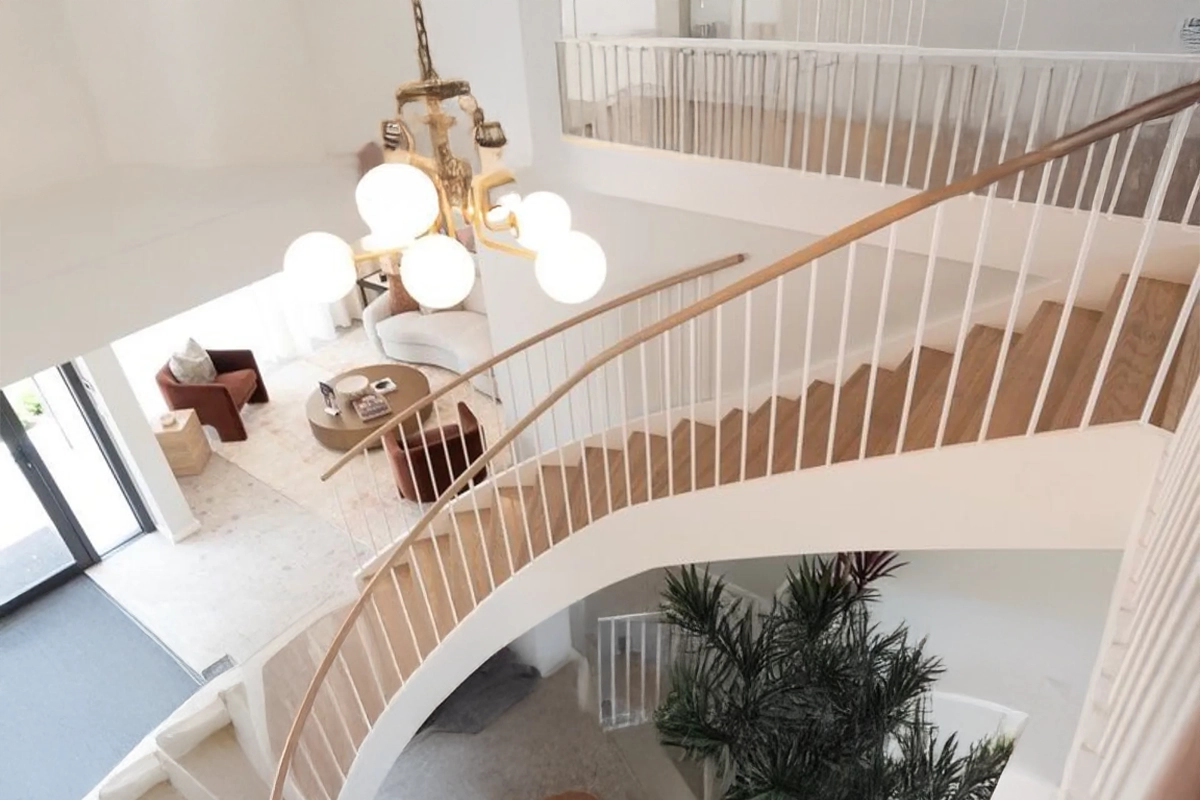
In the anatomy of a house, the staircase is more than just a passage between floors; it is the structural spine. It endures the heaviest traffic, the most significant impact, and the highest visual scrutiny of any fixed element in your home. For Australian homeowners, the challenge is amplified by a climate that swings from coastal salt-mist to interior heatwaves conditions that test the very fiber of building materials.
When you invest in hardwood stair treads, you aren’t just buying timber; you are selecting an engineered solution provided by nature. This masterclass explores why hardwood for stair treads remains the undisputed king of durability, outlasting synthetic alternatives by decades and providing a structural integrity that carpet or laminate simply cannot emulate.
The Physics of Resilience: Beyond the Surface
The primary reason to specify hardwood treads for stairs lies in the density of the material. Unlike softwoods (like Pine) or composites (like MDF), hardwood comes from slow-growing deciduous trees. This slow growth creates a tight, complex vascular structure. In Australia, we have access to some of the densest timbers on Earth, often referred to as “Ironwoods.”
The durability of these woods is measured by the Janka Hardness Test. This test determines the force required to embed a $11.28 \text{ mm}$ ($0.444 \text{ in}$) steel ball halfway into the wood. While a table would show these numbers, the narrative truth is simpler: a high Janka rating means the wood resists the “crushing” force of high heels, the “gouging” of dropped toys, and the “friction” of thousands of footsteps.
When you walk on stair treads for hardwood stairs, you are walking on a material that does not compress. Over 20 years, a softwood or laminate tread will begin to show a “hollow” or a “trough” in the center of the step where the fibers have physically collapsed. A premium Australian hardwood like Spotted Gum or Ironbark maintains its flat, true plane for a century.
External Hardwood Stair Treads: Battling the Australian Elements
The durability requirements of a staircase shift dramatically when it moves beyond the front door. External hardwood stair treads must survive a three-pronged attack: UV radiation, fungal decay, and moisture cycling.
In Australia, the “standard” for exterior durability is high. We categorize timber into four durability classes. For an outdoor staircase, only Class 1 or Class 2 hardwoods should be considered. These timbers possess natural oils and tannins that act as biological shields against termites and rot.
The Role of Moisture Cycling
One of the leading causes of staircase failure is “checking” or splitting caused by the wood expanding in humidity and shrinking in dry heat. High-density external hardwood stair treads are naturally more dimensionally stable. Because the fibers are so tightly packed, there is less “void space” for water to occupy, which minimizes the movement that leads to loose fixings and structural squeaks.
Pro Tip: When installing external treads, ensure that all “end grain” (the cut ends of the timber) is sealed with a high-quality wax or oil. The end grain is like a bunch of straws; if left open, it will suck moisture into the heart of the tread, leading to internal rot even if the surface looks perfect.
The Comparative Narrative: Hardwood vs. The Pretenders
To appreciate the durability of hardwood stair treads, one must look at what happens to the alternatives after five years of a busy Australian lifestyle.
The Carpet Trap: Carpet is often chosen for its “quietness,” but on a staircase, it acts as a filter for skin cells, dust mites, and grit. The fibers at the “nosing” (the front edge of the step) take the most force and invariably bald within a few years. Once worn, the only solution is a total, messy replacement.
The Laminate Illusion: Laminate and vinyl planks are essentially a photograph of wood glued over a compressed core. They cannot be sanded. If a heavy object is dropped on a laminate stair, the “photo” layer chips, revealing the ugly brown core underneath. It is a permanent scar on the centerpiece of your home.
The Hardwood Reality: In contrast, a solid hardwood tread is homogenous. If a deep scratch occurs, it can be spot-repaired. After fifteen years, if the finish looks dull, the treads can be sanded back and refinished with a modern matte or satin coating. You aren’t replacing the stairs; you are simply “resetting” them. This is why hardwood is the most sustainable choice it is a “buy once” material.
Choosing the Right Species: An Australian Palette
Selecting the right hardwood for stair treads involves balancing hardness with structural stability. Here is how the most popular Australian species perform:
- Spotted Gum: The all-rounder. It has a high Janka rating (approx. $11.0 \text{kN}$) and is naturally fire-resistant. Its greasy nature makes it excellent at resisting moisture, though it requires specific adhesives during installation.
- Blackbutt: The architect’s favorite. It provides a neutral, pale straw color that fits the “Scandi-Coastal” aesthetic perfectly. It is a Class 1 durability timber, making it excellent for both internal and external hardwood stair treads.
- Jarrah: The heritage choice. Sourced from Western Australia, Jarrah is famous for its deep reddish-browns. While slightly softer than Spotted Gum (approx. $8.5 \text{kN}$), it is highly resistant to rot and provides a luxurious, “grounded” feel to a home.
- Ironbark: The extreme choice. If you want a staircase that could survive a tank, Ironbark is the answer. It is incredibly heavy and dense, making it the most dent-resistant material available in the timber world.
Installation Mastery: Ensuring Silence and Strength
Durability isn’t just about the wood; it’s about how that wood is held in place. The most common complaint in older Australian homes is the “creaking” staircase. This is caused by friction wood rubbing against wood or wood rubbing against a nail.
When installing hardwood treads for stairs, modern craftsmen use a combination of mechanical fasteners (screws) and chemical bonds (polyurethane adhesives).
- The Chemical Bond: A high-quality flooring adhesive stays slightly elastic. It “takes up the gap” between the tread and the stringer, acting as a permanent shock absorber.
- The Mechanical Fix: Screws are superior to nails because they “clamping” the wood down. In high-density hardwoods, pre-drilling is mandatory to prevent the timber from splitting.
By combining the natural strength of the wood with these modern fastening techniques, the staircase becomes a monolithic structure that remains silent and rock-solid for the life of the building.
The Aesthetic Value of Longevity
Finally, we must consider “visual durability.” In real estate, the term “hardwood” is a value-add. A home with stair treads for hardwood stairs feels more substantial and premium to a potential buyer. Unlike carpet or laminate, which date a home to a specific decade, natural timber is timeless. It evolves with the home, developing a rich patina that adds depth and history to the architecture.
Frequently Asked Questions (FAQ)
1. Why should I choose solid hardwood stair treads instead of engineered timber?
Solid hardwood stair treads are $19 \text{ mm}$ to $32 \text{ mm}$ of consistent timber. Engineered timber usually only has a $3 \text{ mm}$ to $6 \text{ mm}$ “wear layer” of real wood. On a staircase, the front edge (nosing) takes extreme impact. Over time, engineered veneers can peel or delaminate at this high-pressure point, whereas solid hardwood remains structurally sound.
2. What is the best finish to use for internal hardwood treads?
For maximum durability and safety, a water-based polyurethane with an anti-slip additive is recommended. This protects the hardwood for stair treads from spills and wear while providing the necessary grip to prevent accidents.
3. How do I maintain external hardwood stair treads to prevent rot?
The key to maintaining external hardwood stair treads is consistency. Apply a high-quality timber oil every 12 to 18 months. This keeps the wood fibers supple and prevents the “checking” or cracking that allows water to penetrate the core of the tread.
4. Can I change the color of my hardwood stairs later?
Yes. One of the greatest benefits of hardwood treads for stairs is that they can be sanded back. If you have a red Jarrah staircase and want a lighter look, you can sand it and apply a “liming” wash or a different stain to match a new interior design.
5. Are Australian hardwoods better for stairs than imported Oak?
Generally, yes. Most Australian hardwoods (like Spotted Gum or Ironbark) are significantly denser and harder on the Janka scale than European or American White Oak. This makes them more suitable for the high-impact environment of a staircase in a busy family home.