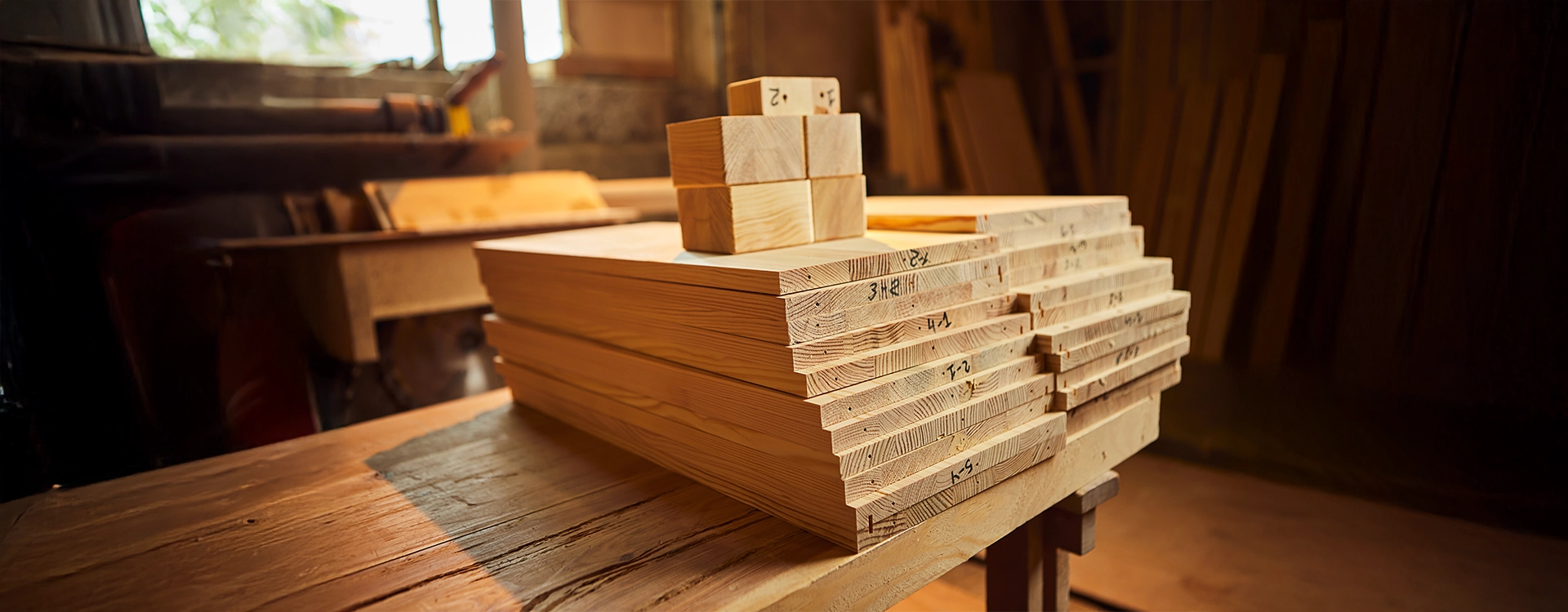

When you stand in a timber yard, you aren’t just looking at stacks of wood; you’re looking at different corners of the globe. On one side, you have the Aussie Battlers-the Ironbarks, Spotted Gums, and Blackbutts that have evolved to survive the harshest conditions on Earth. On the other hand, you have the Global Travellers-species like European Oak or the ubiquitous merbau decking timber that have crossed oceans to reach our shores.
Choosing between a native Australian hardwood and an imported timber is more than an aesthetic decision. It is a choice between two different biological philosophies. One is engineered for fire and drought; the other is often prized for its stability and centuries of tradition.
In this comparative report, we’ll strip away the sawdust to see which material truly earns its place in your home.
Home Turf Advantage: Why Australian Hardwoods are Different
Australian hardwoods predominantly from the Eucalyptus and Corymbia families are unique in the plant kingdom. Because our continent has been isolated and geologically stable for millions of years, our trees have had to adapt to nutrient-poor soils and a climate that swings violently between flood and fire.
The Density Factor
The most striking difference is density. Many Australian hardwoods are so dense they actually sink in water. This translates to an incredible Janka Hardness rating. For context, we measure hardness by the force required to embed an $11.28 \text{ mm}$ steel ball into the wood to half its diameter:
$$Force (kN) = \text{Janka Rating}$$
- Spotted Gum:$\approx 11 \text{ kN}$
- Grey Ironbark:$\approx 14 \text{ kN}$
- European Oak:$\approx 4.9 \text{ kN}$
This density makes native hardwoods significantly more resistant to the daily grind of Australian life impacts from falling objects, high-traffic footwear, and pet claws.
Fire Resistance and BAL Ratings
Because our landscape is fire-prone, many native hardwoods have evolved natural fire resistance. Species like Blackbutt and Spotted Gum are naturally compliant with BAL-29 (Bushfire Attack Level) standards. Most imported timbers require expensive chemical treatments to reach the same level of safety in bushfire-prone areas.
The Challenger: The Case for Imported Timber
If Australian hardwoods are so tough, why does the market import millions of cubic metres of timber every year? The answer lies in stability, workability, and cost-efficiency. The most famous example in the Australian outdoor market is undoubtedly merbau timber decking.
The Stability of the “Global Icons”
Imported timbers like Merbau (Intsiabijuga) or Cedar are prized for their dimensional stability. While some Australian hardwoods can be “nervous” expanding and contracting significantly with humidity a merbau deck is famously steady. This is largely due to the natural oils and resins found in the wood, which act as a sealant against the elements.
The Aesthetic Consistency
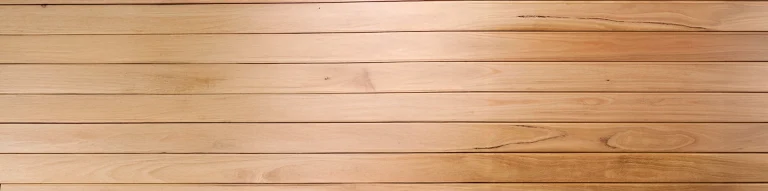
Australian hardwoods are wild. You will see massive color variations, gum veins, and shimmering grains. For some, this is beauty; for others, it’s too busy. Imported timbers, particularly merbau decking, offer a much more consistent, deep reddish-brown palette. This consistency makes it easier to achieve a uniform look across large areas.
Focus Study: The Merbau Phenomenon
You cannot walk through an Australian suburb without seeing a merbau deck. It is the Coca-Cola of the timber world ubiquitous and reliable. Sourced primarily from Southeast Asia and the Pacific, Merbau has become the benchmark for imported outdoor timber.
The Matter of Size
In the Australian market, Merbau is defined by its versatility in sizing. Whether you are looking for the classic, narrow 90mm merbau decking for a traditional look or the modern, expansive 140mm merbau decking, the supply is consistent.
The merbau decking 140 x 19 board has become the industry standard for architectural builds. The wider 140 merbau decking reduces the number of fixings required and provides a wharf-like aesthetic that smaller boards can’t replicate.
The Tannin Trade-off
The primary imported quirk you must manage is tannin leaching. Merbau is incredibly rich in water-soluble tannins. If you install merbau decking timber over a light-colored surface and it rains, the deck will bleed a dark, tea-colored liquid. This is less of an issue with native hardwoods like Blackbutt, which have lower tannin concentrations.
Sustainability: The Ethical Divide
In 2026, the green credentials of your timber are as important as the Janka rating. This is where the difference between local and imported becomes a matter of ethics.
Australian Hardwood Sustainability
Australian timber is managed under some of the strictest forestry regulations in the world (AS 4708). When you buy a native hardwood, you can generally trace its origin to a sustainably managed forest where regeneration is legally mandated.
Imported Timber Sustainability
The history of imported timber, specifically merbau timber decking, has been checkered with concerns over illegal logging in old-growth tropical rainforests. However, the modern market has pivoted. Today, reputable suppliers only provide Merbau that carries FSC or PEFC certification.
Buyer’s Note: Always ask for certification when buying imported timber. If the price of merbau decking seems too good to be true, it may be coming from an unverified source.
Maintenance and Longevity: The Performance Gap
How do they age? This is the ultimate test of value.
- Australian Hardwoods: Because they are so hard, they can be difficult to stain initially as the oils don’t penetrate as deeply. However, they take a sand-and-refinish exceptionally well. A Spotted Gum floor can be refinished multiple times over 60 years.
- Imported Timber: A merbau deck is very forgiving. The high oil content makes it easy to maintain, but because it is slightly softer than native ironbarks, it may show furniture dragging marks more easily over a decade.
Summary Table: At a Glance
| Feature | Australian Hardwoods | Imported (Merbau) |
| Hardness (Janka) | High to Extreme ($10-14 \text{ kN}$) | Moderate ($8.6 \text{ kN}$) |
| Durability | Class 1 or 2 | Class 1 |
| Stability | Variable (Requires careful install) | High (Very stable) |
| Fire Resistance | High (Often BAL-29 natural) | Low (Requires treatment) |
| Primary Sizes | $86\text{mm}, 135\text{mm}$ | 90mm, 140mm |
| Character | High variation, gum veins | Consistent, deep reds |
The Verdict: Which One Suits Your Home?
Choose Australian Hardwood if:
- You live in a bushfire-prone area.
- You want a feature floor with high natural drama and variation.
- You have a high-impact household (dogs, kids, heavy boots).
- You want to support local forestry and minimize transport emissions.
Choose Imported Timber (Merbau) if:
- You want a stable, reliable deck that won’t move much over time.
- You prefer a consistent, deep reddish-brown aesthetic.
- You are looking for specific sizes like 140mm merbau decking at a competitive price point.
- You want a timber that is naturally oily and easier to seal for a DIY project.
Frequently Asked Questions (FAQ)
1. Is Australian hardwood better than Merbau for a pool area?
Because of the tannin leaching, Australian hardwoods like Spotted Gum or Blackbutt are often preferred for pool surrounds. If you use merbau timber decking near a pool, the bleeding can stain the coping and the pool water itself. However, if the Merbau is properly leached and sealed before installation, its natural rot resistance makes it an excellent performer in wet areas.
2.Why is Merbau usually sold in 140 x 19mm while natives are 135 x 19mm?
This is largely due to international milling standards. Most 140 merbau decking is milled to metric sizes for a global market. Australian natives are often milled to $135\text{mm}$ or $86\text{mm}$ to maximise the recovery from the smaller, more varied Australian logs.
3. Does Merbau require more oiling than Australian hardwoods?
Actually, the opposite is often true. Because merbau decking timber is so naturally oily, it holds its moisture well. However, all timber in the Australian sun requires a UV-protective coating every 12 months to prevent it from turning silver-grey.
4. Is Ironbark harder than Merbau?
Yes, significantly. Red Ironbark has a Janka rating of approx$14.0 \text{kN}$, while merbau decking sits at approx$8.6 \text{ kN}$. Ironbark is essentially the “Superman” of timbers, but it is also much harder to saw and drill during construction.
5. Can I mix Australian and imported timbers in the same house?
You can, but be careful with the clash of tones. The pink/yellow tones of Blackbutt often fight with the deep reds of a merbau deck. If you want a cohesive look, try to stick to one colour family either the warm golds of native hardwoods or the deep ochres of imported species.