In design, there is a certain power to the pull of natural timber underfoot. The premium design asset is transforming residential properties across Victoria, providing tactile warmth, unique grain character, and a lifetime of durability that synthetic alternatives can’t match. But moving from conceptual design to a finished layout requires a close examination of actual budget numbers.
If you’re a property owner planning a project, it’s important to grasp the real cost of a hardwood flooring installation Melbourne trades quotation. This investment is not a simple flat-fee transaction but rather a multi-faceted equation that is impacted by timber species selection, structural subfloor preparation, installation procedures and regional labour dynamics.
To help navigate your interior transformation smoothly, this guide breaks down the financial and physical elements that determine a premium timber installation budget.
1. The Core Components of the Invoice: Materials vs. Labour
A professional flooring quotation is split into two major financial streams: material procurement and professional on-site labour. Trying to combine those two values into some generic estimate typically leads to budget miscalculations and surprises halfway through the build.
The Timber Procurement Tier
The cost of raw materials is sensitive to the plant species, board thickness, and the visual grading of the timber. If you are looking at luxury hardwood flooring possibilities on the local market, they usually come in three price categories:
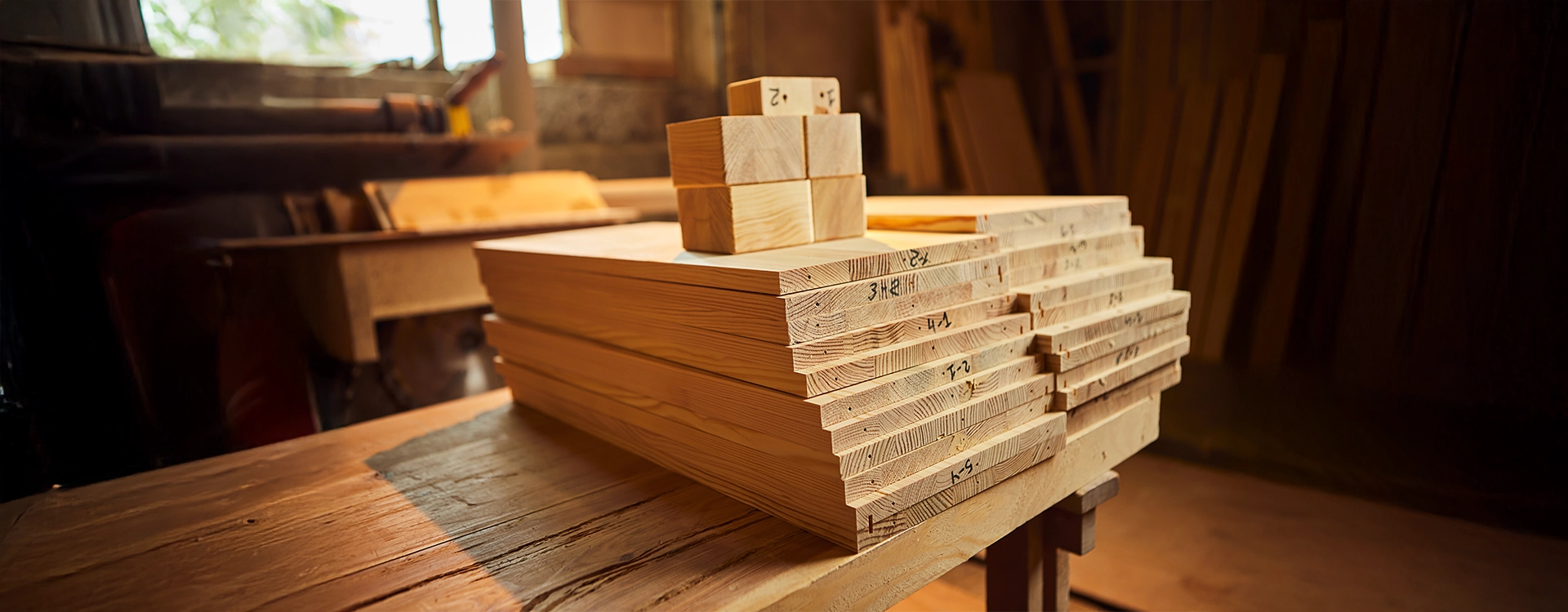
- Select Grade Timber:This premium grade has a very consistent surface with little to no knots, natural imperfections or contrasting colour streaks. Premium prices for premium aesthetics. Supply costs for some species, such as select-grade Blackbutt or Jarrah, can be in the $100 to $150+ per square metre range.
- Standard Grade Timber:It is a mid-range choice with a more classic natural look showing a moderate volume of swirls, mineral streaks and small knots. This is standard for a hardwood floor job and will usually be $55 to $80 per square meter.
- Feature Grade Timber:This entry point is affordable and has prominent grain variations, natural insect trails and bold colour contrasts. Material costs start at $50 per square meter and are designed in rustic or industrial design styles.
The Specialised Labour Tier
On-site labour is highly specialised and is priced based on the structural complexity of the chosen installation method. Across Melbourne, specialised trades generally quote labour-only rates between $40 and $80 per square meter for straightforward room layouts.
But this baseline rate does include actually placing the timber planks on a clean, ready-to-use surface. Any subfloor rectification, decorative border or specialised layout orientation required will be quoted as a separate line item on your trade agreement.
2. Structural Subfloor Architecture: The Foundation of Your Budget
One of the most common and expensive mistakes when budgeting for new flooring is to focus on the top planks and ignore the structural surface beneath. The truth is, the longevity and performance of your floor are directly related to the condition of your subfloor.
Old flooring, such as worn carpet or vinyl, is stripped. The structural slab or timber frame underneath is rarely in a state ready for immediate installation. The base surface is very demanding for measurement, testing, and fixing by a professional team, which directly affects the total cost of the project.
Moisture Defense Matrix
Because wood is inherently dynamic and responds to moisture, concrete slabs must undergo rigorous testing before installation can proceed safely. This is especially critical for ground-floor extensions or multi-residential apartments. Testing a slab for moisture levels generally incurs a flat service fee of $150 to $300 per project.
If the concrete slab shows high moisture levels, installing wood directly over it will cause the planks to rot, warp, or split over time. To safeguard your investment, a professional team will apply a liquid epoxy moisture barrier or install a high-performance, combined moisture barrier and acoustic underlay. This defense layer adds an extra $12 to $20 per square meter to your project total, but it is an essential step for long-term durability.
Structural Self-Levelling Compounding
Solid wood planks need a flat base so they don’t move and squeak over time. If dips, waves or uneven lips are more than 2mm out of level over a 2-meter radius on your concrete foundation, it will need to be mechanically ground down or filled with a fluid, self-levelling compound.
Pouring a standard 5mm to 10mm layer of self-levelling compound to create a perfectly flat base costs between $25 and $45 per square meter. Skipping this prep work to save money upfront often results in bouncy floor boards and creaking joints down the track.
3. The Structural Impact of Fixing Methods on Your Budget
The way your hardwood floors are mechanically attached to the structure of your home can impact everything from the daily walk to the cost of the final project. In modern construction, there are three basic ways of fixing, each with its own pattern of labour and materials cost.
- The Floating Installation Method
This is a very common approach in engineered timber installations. The floorboards are not glued down permanently to the subfloor beneath, but click together to form a single heavy mat that floats on a thin acoustic underlay.
There are no structural adhesives or hidden fasteners to deal with, so labour rates for a floating install are very competitive, at between $35 and $55 per square meter. It is quick and efficient, and you can use it straight out of the box. It does have a little more of a hollow sound underfoot, however, than some permanently bonded methods.
- The Glue-Down (Direct-Stick) Method
The direct stick method is the gold standard in high-end residential architecture. All of the timber boards are glued to the concrete slab with a high-spec flexible polyurethane adhesive.
This method requires specialised skill, careful floor clamping, and premium trade adhesives, pushing labour rates to $80 to $140 per square meter. The result is a solid, quiet feel underfoot that eliminates hollow echo sounds and allows the timber to be sanded and refinished multiple times over its decades-long lifespan.
- The Secret-Nail Structural Method
For traditional homes with existing joists, bearer systems or a newly laid plywood sub-base, secret-nailing is the preferred fixing option. Installers drive heavy-duty, hidden metal fasteners at a 45-degree angle through the tongue of each floorboard, anchoring it into the sub-base below.
A detailed, board-by-board procedure that calls for specialised trade tools and skilled craftsmanship. Installation labour costs from $70 to $120 per square meter.
- Design Geometry: Straight Planks vs. Complex Patterns
Moving away from a standard, straight-running plank layout to a traditional European design pattern completely alters both the aesthetic character and the structural budget of your home renovation.
The Parquet Surcharge (Herringbone and Chevron)
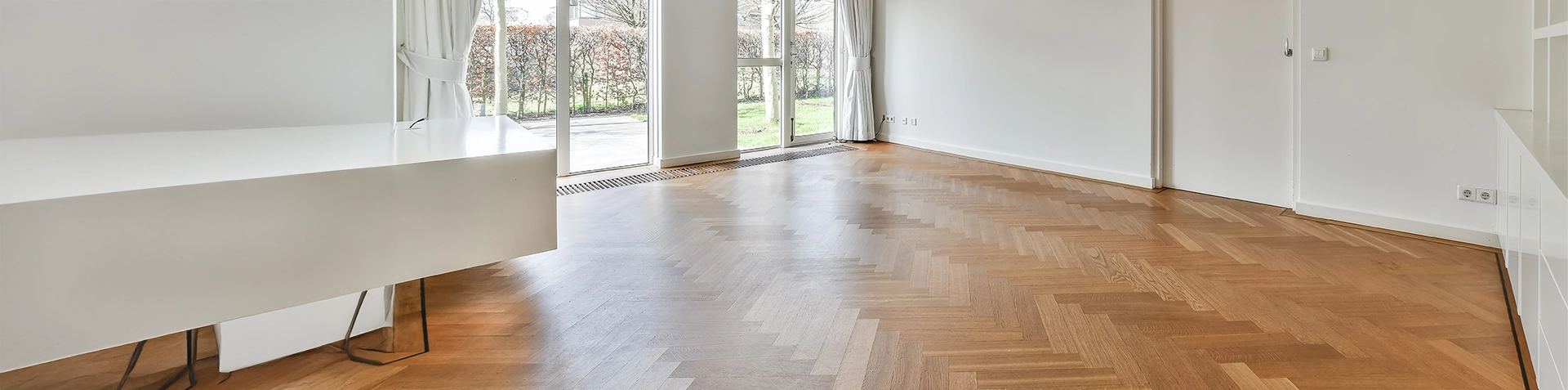
Choosing a classic herringbone or chevron geometric design immediately elevates a room and makes the floor a key design feature. But these complex arrangements increase the time and complexity of installation and layout.
Every single block must be precisely measured, hand-cut at perfect angles, and directly glued down to maintain a precise centreline across the entire home. Because of this high-level skill requirement, a herringbone or chevron pattern adds an extra $20 to $30 per square meter to standard direct-stick labour rates, bringing overall labour costs to $70 to $110 per square meter.
The Material Waste Factor
When ordering materials for a standard, straight-running layout, trades generally add a 10% material waste allowance to the home’s total square meters to cover end cuts.
However, for pattern-heavy layouts like chevron, the frequent angled cuts along walls and doorways generate significantly more scrap material. For these complex designs, you must budget for a 15% to 18% material waste allowance to ensure your installation team doesn’t run out of timber blocks near the end of the project.
5. Completing the Look: Trims, Borders, and Essential Accessories
The final elements that transform a construction site into a polished architectural interior are the transitions, borders, and perimeter moldings. These are often treated as minor details, but can represent a noticeable percentage of your final paperwork if they aren’t factored in early.
Perimeter Skirtings and Scotia Profiles
To allow your timber floor to expand and contract naturally with changing indoor humidity levels, installers must leave a uniform 10mm to 12mm expansion gap around the entire outer edge of the room. This structural gap must be neatly covered.
- Scotia Trims: Installing a painted or timber-matched scotia trim over the gap is a fast, cost-effective solution, costing between $5 and $15 per linear meter.
- Skirting Boards: For a more seamless, premium finish, property owners often choose to remove the existing skirting boards entirely, lay the new flooring underneath, and reinstall new skirting profiles. This detailed carpentry work generally adds $10 to $30 per linear meter to your carpentry invoice.
Staircase Architectural Integration
You need to construct the stairs on site in a way that incorporates a previous staircase into a new timber construction. Every stair, made up of a horizontal tread and a vertical riser, has to be measured, cut and then direct-glued for safety and visual harmony using specially milled stair nosing profiles. Staircase installation is invoiced separately from the main floor, as this job is very intricate and moves slowly, averaging $80 to $160 per individual step in trade workers alone.
6. Long-Term Care: Protecting and Maintaining Your Investment
Once your new timber floor is successfully installed and sealed, preserving its premium finish requires a shift away from traditional, harsh cleaning methods. Flooding a real wood surface with water from a standard mop can introduce moisture into the micro-gaps between boards, leading to cupping and edge splitting over time.
For safe maintenance of your floor, choose a good quality micro-fibre spray mop that sprays a fine, regulated mist of specialist pH-neutral wood floor cleanser. If you’re looking for the best floor mop for hardwood floors, choose a model with a soft micro-fibre pad that can be put in the washing machine and will remove fine dust particles without harming the protective lacquer or oil coating. Avoid harsh household detergents, steam mops and ammonia-based cleaners as they can take the natural shine from the wood and prematurely degrade the protective surface finish.
Balancing Costs with Lifetime Value
Premium flooring is a real investment in the long-term worth of your property, as you can see by navigating the various components of the total hardwood flooring installation cost Melbourne pros present. Investing in genuine wood flooring yields an asset that can be sanded, polished, and exquisitely reinvented for decades to come, even though choosing more affordable synthetic options may reduce your initial construction costs.
You can make sure that your investment will stay straight, true, and full of natural character for generations by working with certified local trades who prioritise thorough subfloor preparation, specify high-quality local timber species, and use premium stainless steel fasteners or flexible polyurethane adhesives.
- How long does it take to install a typical hardwood floor?
Solid timber is a single piece of raw wood, cut straight from a log. Its durability is second to none, but must be fixed permanently by direct-stick or secret-nail methods. Engineered options come with a thin real wood veneer over a multi-layered ply or HDF core for improved stability to moisture movement and faster, cost-effective floating installations.
- Can I save on labour costs by laying solid timber floorboards directly over my old carpet?
No, this is not possible. Real hardwood flooring, wood flooring planks cannot be installed over soft, uneven surfaces like old carpet, cork layers, or damaged vinyl sheets. All old floor coverings must be completely removed down to the bare concrete slab or timber joists. The underlying base must then be thoroughly scraped, cleaned, and levelled to create a stable foundation for the new installation.
- Why are the quotes on apartment installations higher than the regular standalone house?
Apartment installations have their own logistical challenges that affect overall labour times. Teams must adhere to strict noise guidelines imposed by strata management, pre-book service lifts, carry materials through narrow common areas and dispose of old materials through specific waste management systems. These factors typically add 10% to 15% logistical surcharge on standard labour quotations.
- What is the main difference between solid timber and engineered wood flooring options?
Solid timber is a single, unbroken piece of raw wood, cut directly from a log. It offers unrivalled durability but requires permanent direct-stick or secret-nail fixing. Engineered options feature a thin real wood veneer over a multi-layered ply or HDF core for better stability against moisture movement and quicker, cost-effective floating installations.
- How soon can we walk on our new hardwood floor wood boards after installation is finished?
If your floor was laid using the click-lock floating method, you can walk on the surface and move your furniture back into the room immediately after the last trim is installed. However, if your project utilised the direct-stick method with polyurethane adhesives, you must keep the room completely clear of foot traffic for 24 to 48 hours to allow the structural bond to cure completely.