MDF Mouldings & Architraves Melbourne:
Some finishing products don’t need to draw attention to themselves. They just need to be straight, consistent and easy to work with — and leave a clean finish once the painter is done.
That is exactly where MDF mouldings earn their place.
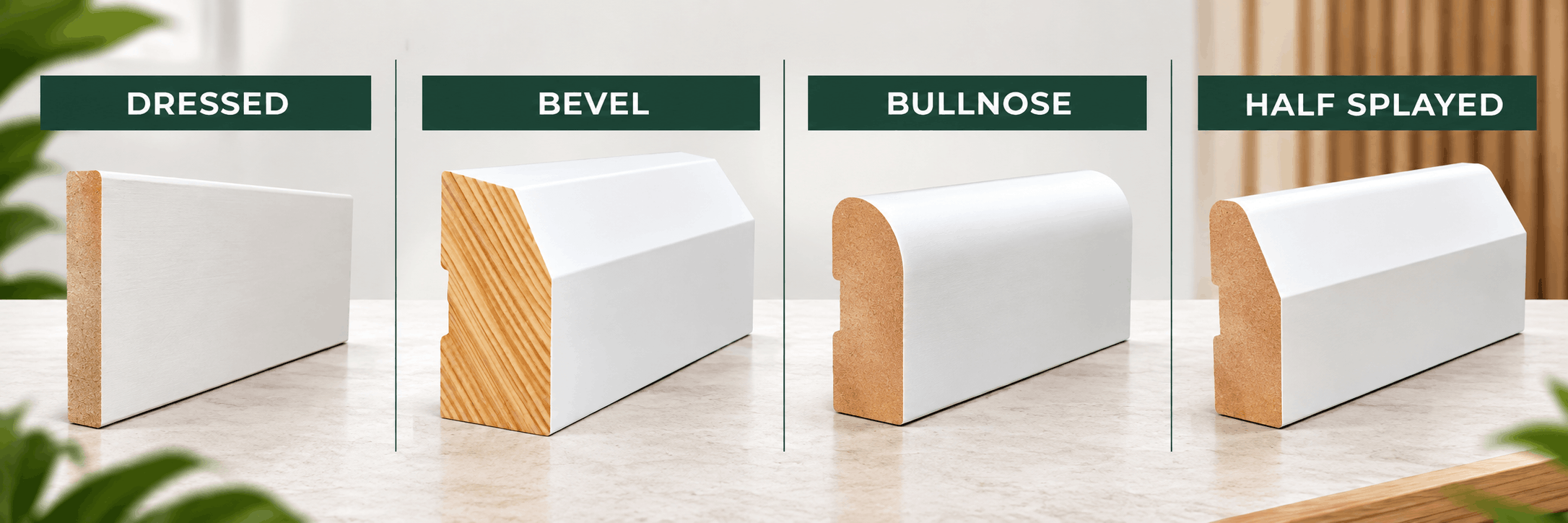
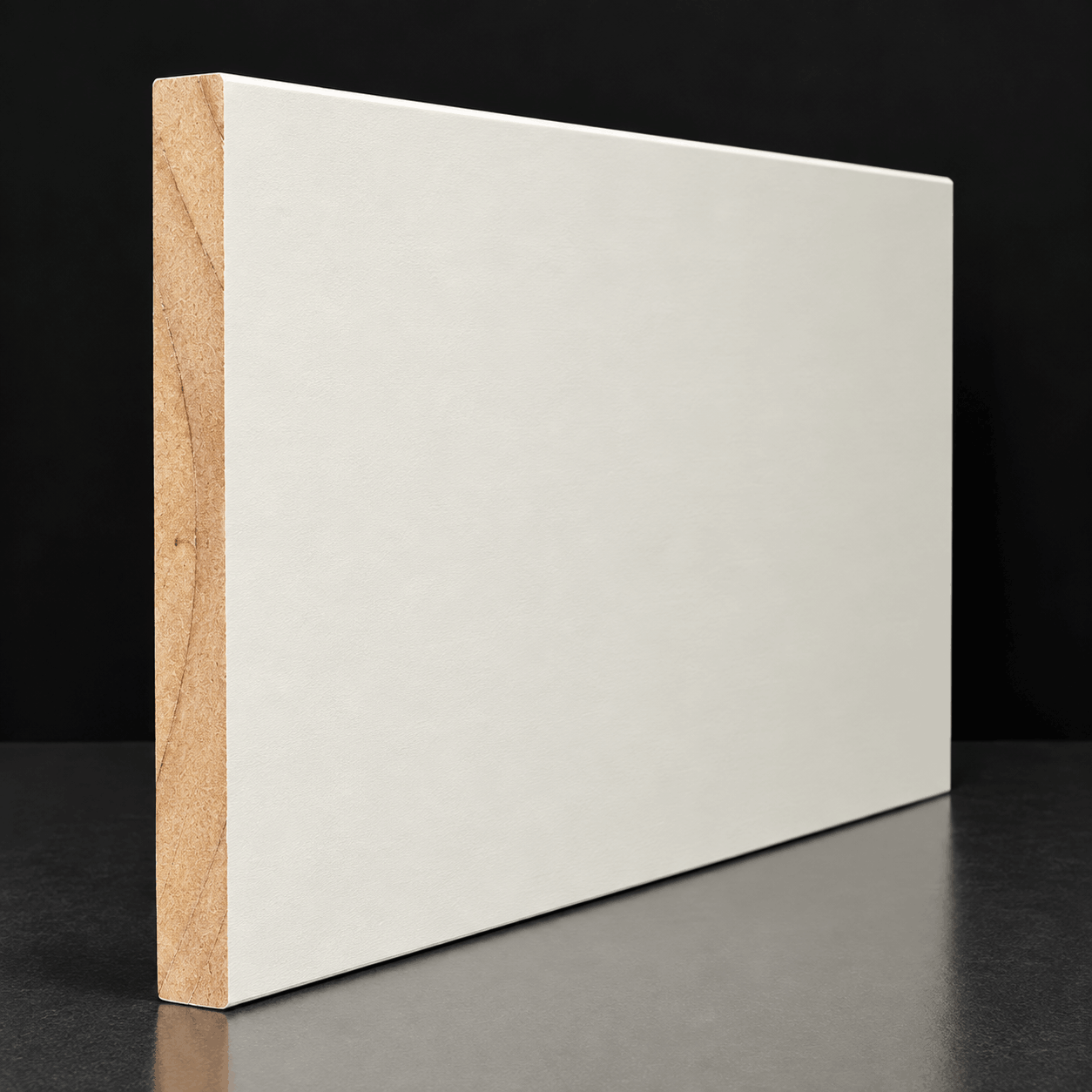
At Melbourne Timber Supplies, we supply MDF mouldings in Melbourne for residential building, renovations, extensions and interior fit-outs. Our MDF range covers Bevel, Bullnose, Dressed and Half Splayed profiles, giving builders, carpenters and homeowners practical options for finishing around doors, windows and along walls.
Whether you’re trimming out a new home or replacing tired architraves during a renovation, you can choose the profile that works with the rest of the room rather than settling for whatever happens to be available.
Browse the range online or speak with the Melbourne Timber Supplies team about sizes, quantities and availability for your job.
Why MDF Works So Well for Interior Mouldings:
There is a reason MDF has become such a familiar sight on Australian building sites.
For painted interior work, it makes sense.
Unlike natural timber, MDF doesn’t have knots or a visible grain pattern to work around. The surface is uniform, which helps when the final objective is a smooth painted trim rather than a natural timber appearance.
That consistency is particularly useful when you’re running the same architrave or skirting profile through multiple rooms.
Think about a new house with ten, fifteen or twenty door openings. Small differences become much more noticeable when the same detail is repeated throughout the property. Using a consistent moulding helps maintain the same look from room to room.
For this reason, MDF skirting and architraves are commonly considered for new homes, apartment interiors, renovations and other internal finishing work.
MDF Architraves for Doors and Windows
An architrave has a fairly straightforward job: it finishes the perimeter of a door or window and covers the joint between the jamb and surrounding wall.
Visually, though, it does quite a bit more.
Change the width or shape of an architrave and the whole doorway can look different.
That’s why we wouldn’t recommend choosing MDF door architraves based on price alone. Look at the room they’re going into. Look at the skirting. Check the doors, cabinetry and other fixed details.
A straightforward dressed profile might sit naturally in a contemporary interior. A bevel or half-splayed profile introduces a little more shape without becoming overly decorative. Bullnose gives you another option where a softer edge works better with the room.
There isn’t one profile that is “best”. The better choice is the one that makes sense alongside everything else already in the house.
Bevel MDF
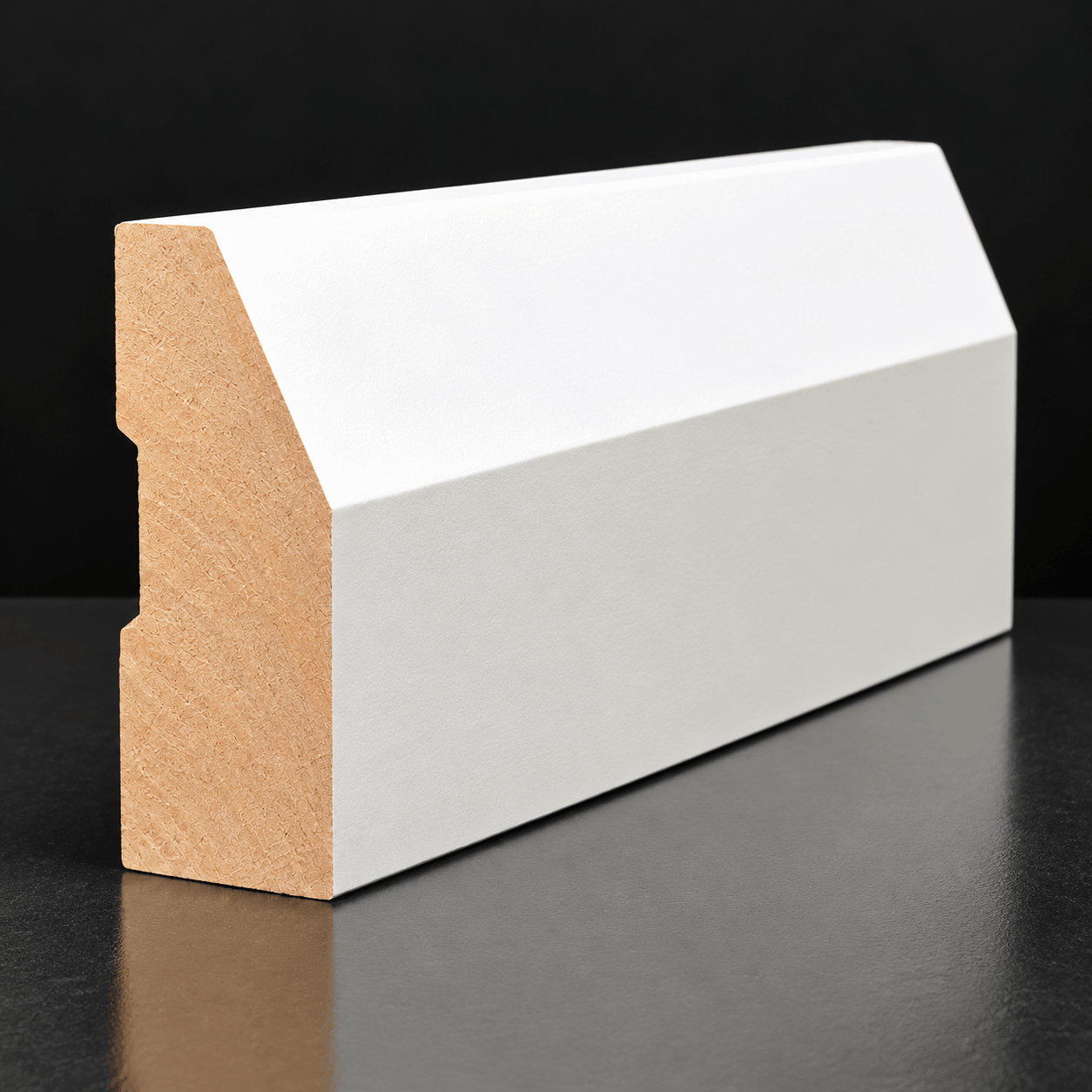
Bevel mouldings use an angled detail to break up what would otherwise be a completely square face.
It’s a relatively simple change, but once painted and installed it gives the trim a defined edge without making it particularly ornate.
That makes bevel profiles useful in interiors where completely plain trim feels a little too basic, but traditional decorative mouldings would be too much.
Bevel MDF can be considered around internal doors and windows or as part of a coordinated skirting and architrave selection.
When you’re choosing it, check how the angled section will meet adjacent skirting. Looking at both products together before ordering usually gives a better result than selecting each one separately.
Bullnose MDF
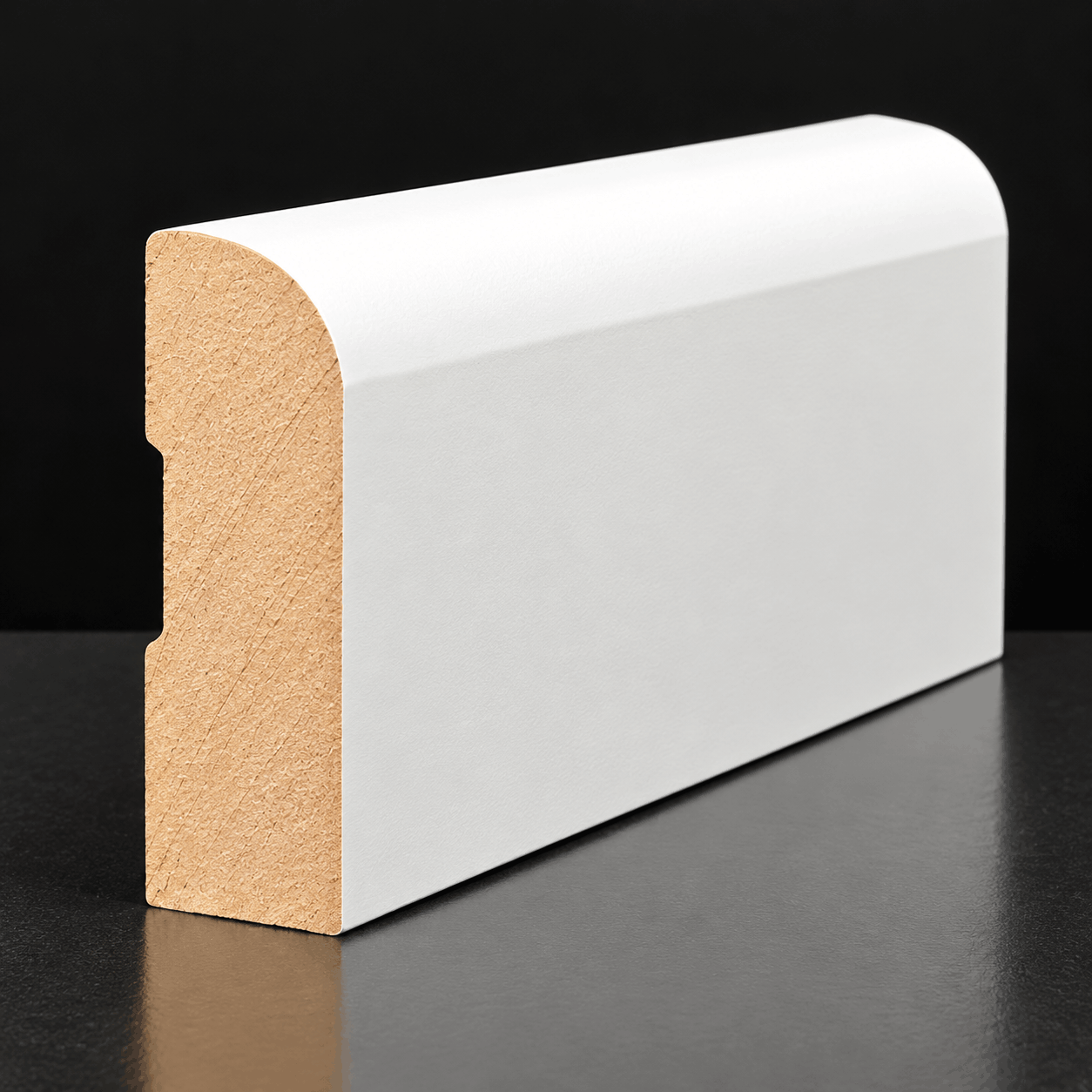
Bullnose is easily recognised by its rounded edge.
The curved detail gives the moulding a softer appearance than a sharp square profile and works across a variety of interior styles.
It’s one of those profiles that is worth seeing in context. On its own, the difference can seem minor. Run it around every doorway in a room and the rounded detail becomes part of the character of the interior.
If you’re replacing existing bullnose mouldings, measure the old material rather than relying on appearance alone. Width and thickness matter, particularly where new architraves need to meet existing skirting.
For renovation work, keeping a short offcut of the original trim is also useful when you’re comparing replacements.
Dressed MDF
Sometimes simple really is the better option.
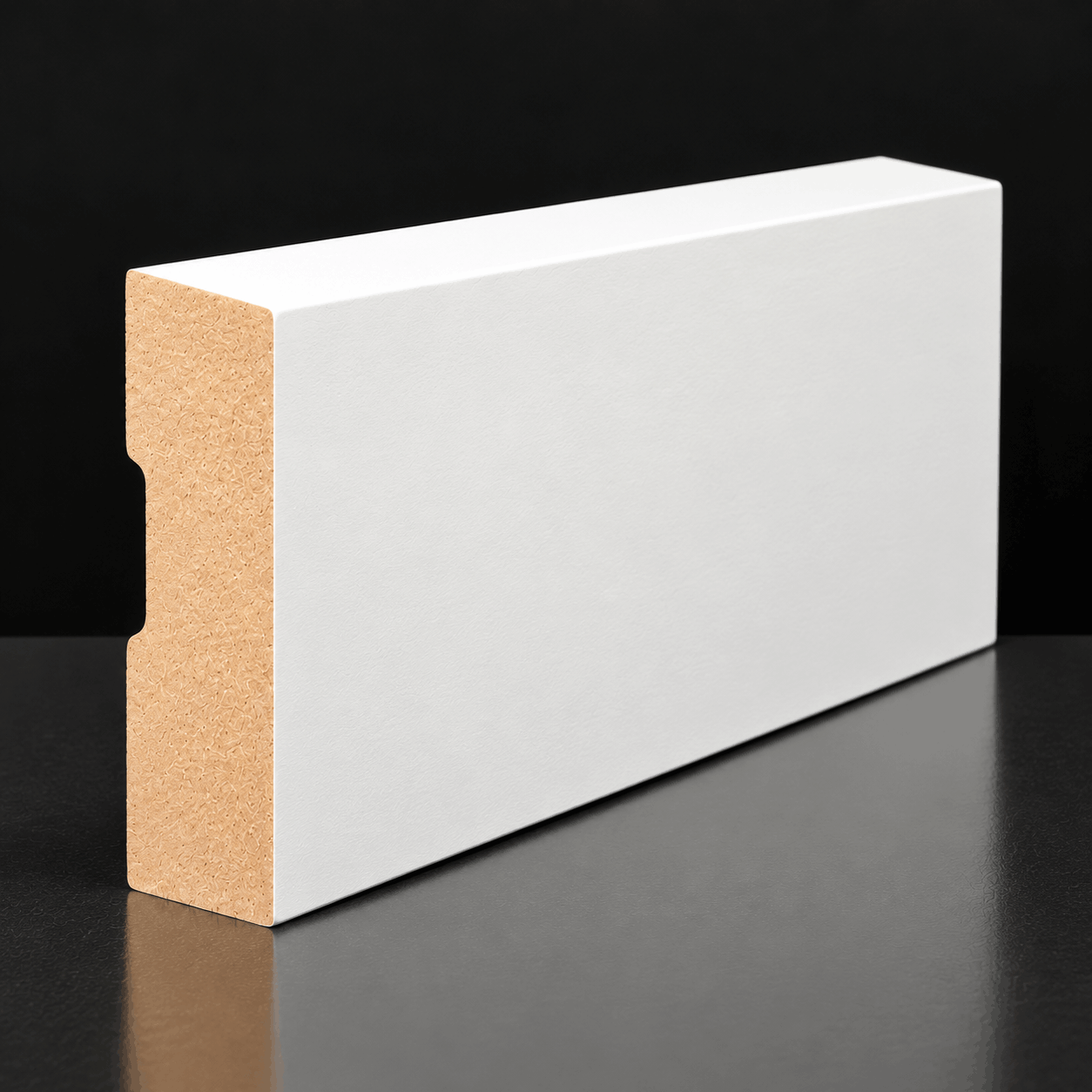
Dressed MDF gives you a clean profile without unnecessary decorative detailing. It works particularly well where the interior design already relies on simple lines and you don’t want the mouldings competing with doors, flooring, cabinetry or wall finishes.
It can also make matching different parts of a renovation easier.
If you’re updating an interior and don’t need to replicate an ornate period profile, a straightforward dressed moulding gives you more flexibility.
Before ordering, however, check the dimensions carefully. Plain profiles make alignment particularly noticeable, so thickness differences where skirting and architrave meet can stand out once everything has been painted.
Half Splayed MDF
Half splayed profiles offer a middle ground between plain dressed mouldings and more decorative traditional profiles.
The angled section introduces some detail while keeping the overall shape relatively restrained.
This can make half splayed MDF a good option for homes where you want the trims to have some definition without dominating the interior.
It also works well when architraves and skirting are chosen together in complementary dimensions.
If you’re comparing MDF architraves for sale, don’t judge half splayed against another profile from a close-up photograph alone. Consider how much of the profile you’ll actually see once it runs around a full doorway.
Scale changes the way mouldings look.
Choosing MDF Skirting and Architraves Together
One of the most common mistakes when selecting interior mouldings is treating skirting and architraves as two unrelated purchases.
They aren’t.
Walk over to almost any internal doorway and look at the bottom corner. The architrave meets the skirting right there.
If the thickness, profile or proportions don’t work together, that junction can look awkward.
Before you buy MDF architraves in Melbourne, check what skirting you’re using. If existing skirting is staying in place, measure it. If both are being replaced, select them together.
You don’t necessarily need exactly the same width, but there should be some visual relationship between the two.
This matters even more on a full renovation where the same junction is repeated throughout the house.
Get one doorway right and you’ve solved it once. Get the combination wrong and you’ll be looking at the same problem in every room.
MDF for Modern Melbourne Homes
Contemporary interiors often rely on fairly restrained detailing.
Flat-panel doors, clean cabinetry, timber or hybrid flooring and neutral wall colours don’t always need elaborate mouldings around them.
In these homes, MDF provides plenty of flexibility.
A dressed profile can keep things minimal. Bevel or half splayed can introduce a little definition. Bullnose softens the edge.
The key is proportion.
A profile that looks balanced around a large entry may feel oversized around a narrow internal doorway. Equally, very narrow trims can disappear in rooms with high ceilings or larger openings.
Take measurements and think about the entire elevation rather than selecting a moulding purely from a small sample.
Using MDF Mouldings in Renovations
Renovations are where things tend to get interesting.
You remove an old architrave and discover it is an unusual width. One room has been renovated previously and uses a different profile. The skirting doesn’t quite line up. Or an old doorway has been modified at some point and nothing is completely square anymore.
That’s fairly normal.
If you’re replacing mouldings in an existing Melbourne home, don’t throw the old pieces away immediately.
Keep a clean section and measure it.
If you’re only repairing part of a room, matching the existing moulding may be important. If the entire room is being stripped back, you have more freedom to change the profile.
Customers looking to buy MDF mouldings in Melbourne for renovation work can bring their measurements, photos or an existing offcut when discussing options with our team.
It can make identifying a suitable replacement much quicker.
Pre-Primed MDF and Painted Finishes
MDF is commonly selected where the finished moulding is going to be painted.
Pre primed MDF architraves can reduce some of the preparation required before applying the final coating system, depending on the particular product.
That doesn’t mean installation should be rushed.
Cut edges, nail holes, joins and mitres still need appropriate preparation if you want a tidy final result. The quality of the finished architrave is affected just as much by cutting, fixing and painting as it is by the moulding itself.
Before painting, follow the relevant product and coating manufacturer’s preparation requirements.
A little more attention during second fix generally means considerably less frustration when the final coat goes on.
Where Are MDF Mouldings Commonly Used?
MDF mouldings are primarily associated with internal finishing work and can be considered for a range of residential and commercial interior applications.
Common uses include:
- Internal door architraves
- Window architraves
- Skirting boards
- Interior renovation work
- New residential construction
- Apartment fit-outs
- Interior wall detailing
- Replacement of existing painted trims
- Office and commercial interiors
- General internal carpentry
Always select the MDF product appropriate to the particular installation environment and check product specifications where moisture exposure or other special conditions are involved.
Measuring MDF Architraves
It doesn’t take long to measure architraves, but ordering from rough estimates can become expensive when you’re doing an entire house.
Start by counting every opening.
For a standard doorway you’ll generally need material for both vertical sides and the head. Measure each section rather than assuming every door is identical, particularly in an older house.
Then look at the number of windows requiring trim.
Record your measurements and allow for cuts and reasonable wastage.
It’s also worth checking:
- Profile required
- Moulding width
- Thickness
- Number of door openings
- Number of windows
- Skirting dimensions
- Lengths required
- Internal corners and junctions
- Material required for cutting allowance
For a larger project, putting these details into a cut list or take-off before ordering can save a second trip.
Ordering MDF Mouldings for Larger Projects
When you’re trimming one doorway, running short by a length is inconvenient.
When you’re fitting out an entire house, it can interrupt the job.
Builders and carpenters ordering larger quantities should calculate the full requirement before placing the order wherever possible.
That includes skirting as well as architraves.
It also gives you an opportunity to check that the same profile and dimensions are being used consistently across the project.
If you’re looking for an MDF moulding supplier in Melbourne for a new build, multi-room renovation or fit-out, speak with Melbourne Timber Supplies about your quantity requirements.
Send through your cut list or take-off if you already have one.
MDF Mouldings for Builders, Carpenters and DIY Renovators
Not everybody ordering MDF needs the same level of information.
A carpenter may arrive knowing the exact profile, width and total lineal metres required.
A homeowner might arrive with a photo of a doorway and ask, “What do I need to replace this?”
Both are fine.
Melbourne Timber Supplies works with trade customers and DIY renovators, and our aim is to help you get the material that actually suits the job.
If you’re uncertain about the profile, bring an existing piece where possible. If you know exactly what you need, contact us about availability and quantities before heading in.
Buy MDF Mouldings & Architraves in Melbourne
Finishing a house properly comes down to getting dozens of small details right.
Architraves are one of them.
Choose the right profile and they quietly tie doors, windows, walls and skirting together. Choose the wrong size or style and you’ll notice it every time you walk through the room.
Melbourne Timber Supplies stocks MDF mouldings across Bevel, Bullnose, Dressed and Half Splayed profile categories, giving you practical choices for new construction and renovation work.
If you’re searching for MDF architraves in Melbourne, MDF skirting boards in Melbourne or a reliable place to purchase MDF mouldings for an upcoming project, browse our range online or speak with the Melbourne Timber Supplies team.
Tell us what you’re building, bring your measurements or send through your material list.
We’ll help you get the MDF mouldings you need to finish the job.