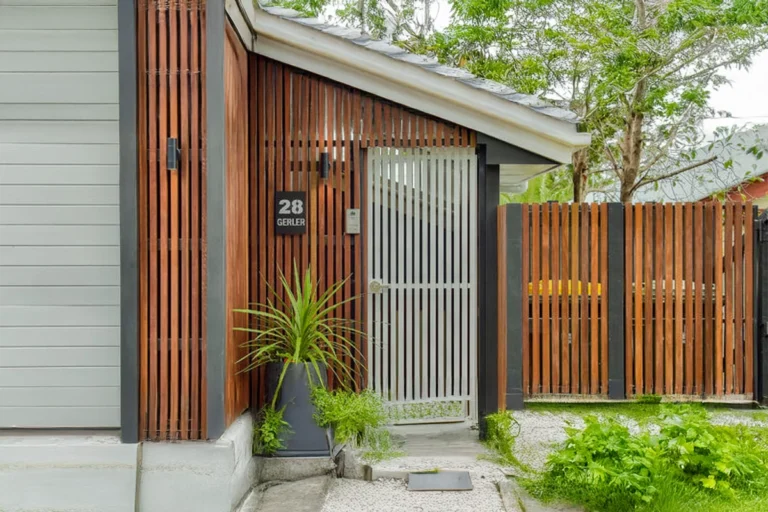
Planning an outdoor renovation in Melbourne often comes down to balancing street-level privacy, architectural aesthetics, and material budgets. Whether you are shielding an alfresco area in Camberwell, installing a modern feature facade in South Yarra, or building a compliant pool barrier in Brighton, slatted timber screening has become the preferred design choice across Victorian suburbs.
However, calculating your overall project expenditure requires looking past a single price tag.
Understanding the true screening battens cost in Melbourne means evaluating timber species tiers, profile dimensions, linear meter rates, sub-framing requirements, and long-term maintenance needs.
This thorough study dissects Melbourne’s timber pricing environment, including reasonable material costs, installation costs, and doable strategies to maximise your screening budget.
1. Average Material Costs: Price Per Linear Meter ($/m$)
When shopping across Victorian timber yards and trade suppliers, screening battens are sold by the linear meter ($/m$). The total cost per meter varies depending on the raw material’s hardness rating, natural durability, and profile depth.
Budget Tier ($2.50 – $5.50 per linear meter)
- Species: H3 Treated Radiata Pine ($19\text{mm} \times 42\text{mm}$ or $42\text{mm} \times 42\text{mm}$).
- Best Used For: Paint-finish DIY border screens, low-cost rental renovations, and hidden garden utility enclosures.
- Cost Profile: In Melbourne, treated pine has the lowest beginning material cost. But because pine is a fragile wood, it needs to be painted or stained right away to stop moisture absorption and UV warping.
Mid-Range Tier ($6.00 – $11.50 per linear meter)
- Species: Merbau, Silvertop Ash, and Victorian Ash ($19\text{mm} \times 42\text{mm}$ to $19\text{mm} \times 70\text{mm}$).
- Best Used For: Feature screens near outdoor dining areas, boundary fences, and sheltered entryways.
- Cost Profile: Merbau delivers high natural durability and rich reddish-brown tones at a competitive price. Silvertop Ash provides a locally sourced native hardwood alternative with good fire resistance ($BAL-29$), making it popular in Melbourne’s outer eastern suburbs.
Premium Hardwood Tier ($12.00 – $22.00+ per linear meter)
- Species: Spotted Gum, Blackbutt, and Red Ironbark ($42\text{mm} \times 42\text{mm}$ to $42\text{mm} \times 65\text{mm}$ architectural profiles).
- Best Used For: High-exposure architectural facades, grand entryway screens, and luxury pool privacy walls.
- Cost Profile: Dense Class 1 Australian hardwoods sit at the top of the price spectrum. Their extreme natural density ensures they resist Melbourne’s volatile weather swings without twisting or bowing, delivering an extended lifespan of 25+ years.
2. Converting Linear Meters to Square Meter Estimates ($/m^2$)
You must translate linear metre prices into a total square metre rate ($/m^2) in order to properly budget for a project. The gap size between slats and the batten width you select will have a significant impact on the square metre cost.
How Gap Spacing Impacts Material Quantities?
For a standard screen using $42\text{mm}$ wide battens:
- Tight 10mm Gap (High Privacy): Requires approximately 19.2 linear meters of timber per square meter ($m^2$).
- Standard 15mm Gap (Balanced Shade & Ventilation): Requires approximately 17.5 linear meters of timber per square meter ($m^2$).
- Open 25mm Gap (Light Filtering): Requires approximately 14.9 linear meters of timber per square meter ($m^2$).
Total Material Cost Ranges per Square Meter ($m^2$)
- Treated Pine Screen: $45 to $85 per $m^2$ (Materials only)
- Merbau Hardwood Screen: $110 to $180 per $m^2$ (Materials only)
- Spotted Gum / Blackbutt Screen: $210 to $380+ per $m^2$ (Materials only)
3. Sub-Framing, Fasteners, and Hardware Expenses
The supporting structure has to be engineered to provide a durable timber screen. As you budget for your screening battens cost in Melbourne, don’t forget to include important sub-framing materials and trade hardware:
- Sub-Frame Posts and RailsTo put battens over existing masonry or new steel posts, you will need $45\text{mm} \times 70\text{mm}$ or $45\text{mm} \times 90\text{mm}$ treated pine or hardwood sub-framing rails. Add $15 to $35 per $m^2$ for framing timber.
- Stainless Steel Fasteners: Melbourne’s coastal moisture and rain mean standard zinc-plated screws will corrode quickly, causing black tannin stains on hardwood. Grade 304 or 316 stainless steel countersunk screws add roughly $10 to $20 per $m^2$ in hardware costs.
- Protective Oils and Tannin Sealers: Pre-sealing all six sides of your timber battens before mounting is essential. High-grade exterior penetrating timber oils cost between $80 and $140 for a 4-liter can, covering roughly $30\text{m}^2$ to $40\text{m}^2$ per coat.
4. Labour and Installation Rates Across Melbourne
When you hire a professional carpenter, landscaper, or fencing specialist, labour will make up a large portion of your total project invoice.
- Hourly Tradesperson Rates: Qualified Melbourne carpenters and landscapers charge between $80 and $130 per hour (+ GST).
- Square Meter Labour Installation Rates: For straightforward ground-level screening, labour costs range from $120 to $220 per $m^2$.
- Complex or Elevated Installation Rates: Scaffolding requirements, high-rise balconies, or custom curved joinery can increase labour charges to $250 to $400+ per $m^2$.
Installed Project Cost Summary (Materials + Labour)
- Standard Treated Pine Screen (2m x 5m area): $1,200 to $2,200
- Mid-Range Merbau Screen (2m x 5m area): $2,500 to $4,200
- Architectural Spotted Gum Screen (2m x 5m area): $4,500 to $7,800+
5. Smart Ways to Optimise Your Screening Budget
If initial quotes exceed your budget targets, strategic material adjustments can lower costs without compromising visual appeal:
- Mix Species Across Zones: Use premium hardwoods like Spotted Gum for high-visibility entryways or alfresco feature walls, while opting for cost-effective Merbau or treated pine for hidden side-passage boundary fences.
- Widen the Gap Ratio: Increasing batten gaps from $10\text{mm}$ to $18\text{mm}$ reduces total linear meters needed by up to 15%, cutting raw timber expenditure significantly across large boundaries.
- Pre-Cut and Pre-Oil Yourself: You can reduce trade labor charges by purchasing raw timber battens, pre-sanding, and pre-oiling them at home before your carpenter arrives to complete the structural framing and mounting.
Balancing Cost with Long-Term Value
To find the real cost of timber screening battens in Melbourne, you need to look beyond the initial quotes for materials. Treated pine is a great budget option to begin with, but high-density native hardwoods such as Spotted Gum and Blackbutt are much more resistant to Melbourne’s unpredictable climate, and will give you low maintenance and a longer lifespan.
Choose the right species for your exposure level, accurately calculate linear metre coverage and partner with experienced local trade suppliers to build a stunning privacy screen that adds security, shade and lasting property value to your home.
Frequently Asked Questions (FAQ)
1. Is Merbau or Spotted Gum cheaper for timber screening battens in Melbourne?
Melbourne native Spotted Gum is more expensive than Merbau by 30% to 50% per linear metre. Merbau is a cost-effective hardwood option, readily available and widely imported into Victorian timber yards. But Spotted Gum has a higher natural hardness, natural bushfire resistance ($BAL-29$) and zero risk of red tannin bleeding post-installation.
2. How do I calculate how many linear meters of battens I need for my screen?
Next, measure the overall height and width of your screen in metres to determine the total linear metres, which will give you the surface area ($m^2$). Then add your desired gap size (for example $0.015\text{m}$) to the width of one batten (for example $0.042\text{m}$) to get the combined spacing unit ($0.057\text{m}$). Divide $1.0\text{m}$ by this spacing unit to get metres needed per $m^2$ ($17.54\text{m}$). Finally, multiply this number by your total screen area and add a 10% waste factor for end cuts.
3. Are aluminum timber-look screening battens cheaper than real timber in Melbourne?
Initial material cost for high-quality powder-coated aluminium timber-look battens ($18\text{ to }$35 per linear metre) can be more expensive than mid-range real timber such as Merbau. Aluminium, however, requires no ongoing oiling, sanding or staining, making it a cost-effective long-term option when considering total 10-year costs – especially in high fire risk ($BAL-FZ$) or coastal zones.
4. Do I need a building permit to install a timber privacy screen in Melbourne?
A building permit is generally not required for timber privacy screens along property boundary lines in Victoria that are less than 2.0 metres high (or less than 1.5 metres when within 3 metres of the front street boundary). However, if your screen is part of a swimming pool safety barrier, exceeds height limits or is under a local council heritage overlay, you must consult a registered building surveyor before installation.
5. How much does it cost to maintain timber screening battens annually?
Ongoing maintenance costs for a standard $10\text{m}^2$ hardwood screen average $50 to $100 per year for high-quality exterior penetrating oil and applicator supplies if you perform the maintenance yourself. Having a professional handyman wash and re-oil a feature timber screen typically costs between $250 and $450 per service every 12 to 18 months.