Structural F14 Rough Sawn Hardwood Posts – Spotted Gum & Ironbark
There are times when a standard timber post simply isn’t enough. A large pergola, verandah, entrance or structural outdoor project can call for something heavier, and that’s where solid hardwood starts to make sense.
At Melbourne Timber Supplies, our F14 rough sawn hardwood posts are intended for projects where the specification calls for structural-grade hardwood and the natural character of rough sawn timber works with the design. The current range covers five substantial sizes, beginning at 100x100mm and running right through to 250x250mm.
These aren’t small decorative pieces. Once you move into 150, 200 or 250mm square hardwood, the post becomes a noticeable part of the structure.
That’s worth thinking about before ordering. Strength requirements matter, of course, but so do proportions, finish, handling and the way the timber will look once the rest of the project comes together.
What Does F14 Actually Tell You?
Anyone shopping for structural timber will eventually run into terms such as F7, F14 and F17. They aren’t product names. The F-rating relates to the timber’s stress grade and therefore its structural properties.
Spotted Gum can be visually stress graded to a number of grades, including F14 in its unseasoned state. Queensland Government timber information, for example, lists F11, F14, F17 and F22 among the possible unseasoned stress grades for Spotted Gum species.
The important part for a buyer is simpler: if your plans or engineer specify F14 timber, buy timber that meets the required specification rather than choosing a post merely because its dimensions look right.
A 150x150mm post isn’t automatically interchangeable with every other 150x150mm timber post.
For structural projects, dimensions are only one part of the decision. Species, grade, condition, installation and the requirements shown on the plans all need to line up.
If you’re looking to buy F14 hardwood posts Melbourne, have those project details handy when you enquire.
Why Spotted Gum?
Spotted Gum has been used across Australia for a long list of applications, from heavy construction through to flooring, decking, cladding and joinery. Its combination of strength, density and distinctive timber character is a big reason it continues to turn up on both practical building jobs and projects where the timber will remain visible.
Colour isn’t fixed.
Depending on the piece, Spotted Gum heartwood can move through lighter brown shades into deeper brown and red-brown tones. Grain can vary as well, with some timber showing the wavy figure associated with the species.
That’s something to remember if your posts will remain exposed as a design feature.
Real hardwood isn’t supposed to look like a printed laminate. Two posts can belong to the same species and still show differences in tone, grain and natural markings.
For many projects, that’s exactly the point.
What About Ironbark?
The Melbourne Timber Supplies category is identified as Spotted Gum/Iron Bark, so it’s important not to present the whole range as though every available post is necessarily Spotted Gum.
Both names are familiar on Australian building sites, but the timber supplied for a particular size or order should be confirmed when purchasing.
If species matters to the architectural finish, engineering requirement or the way you’re planning to finish the timber, ask before ordering.
That’s especially relevant when several posts will sit beside each other in a highly visible area. A customer building a concealed structural element may have different priorities from someone putting four large hardwood posts across the front of a new verandah.
The second job is as much about appearance as it is about getting timber onto site.
Rough Sawn Means Rough Sawn
This part sounds obvious, but it’s worth spelling out.
These are rough sawn hardwood posts, not dressed decorative posts with perfectly smooth faces.
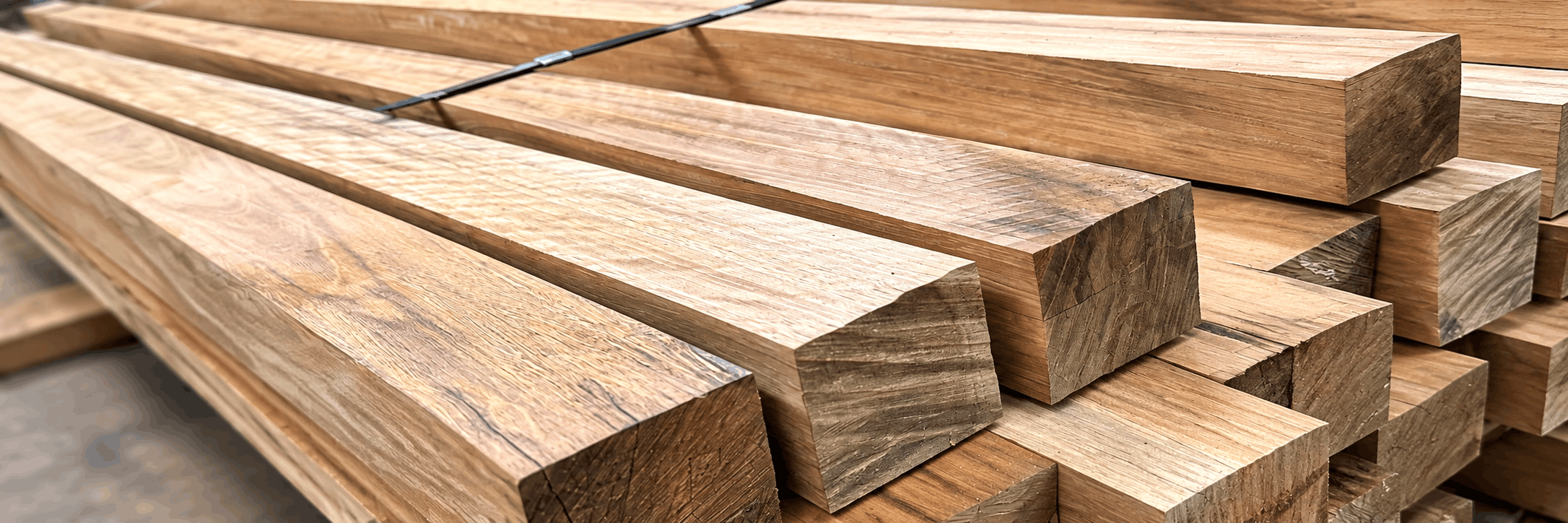
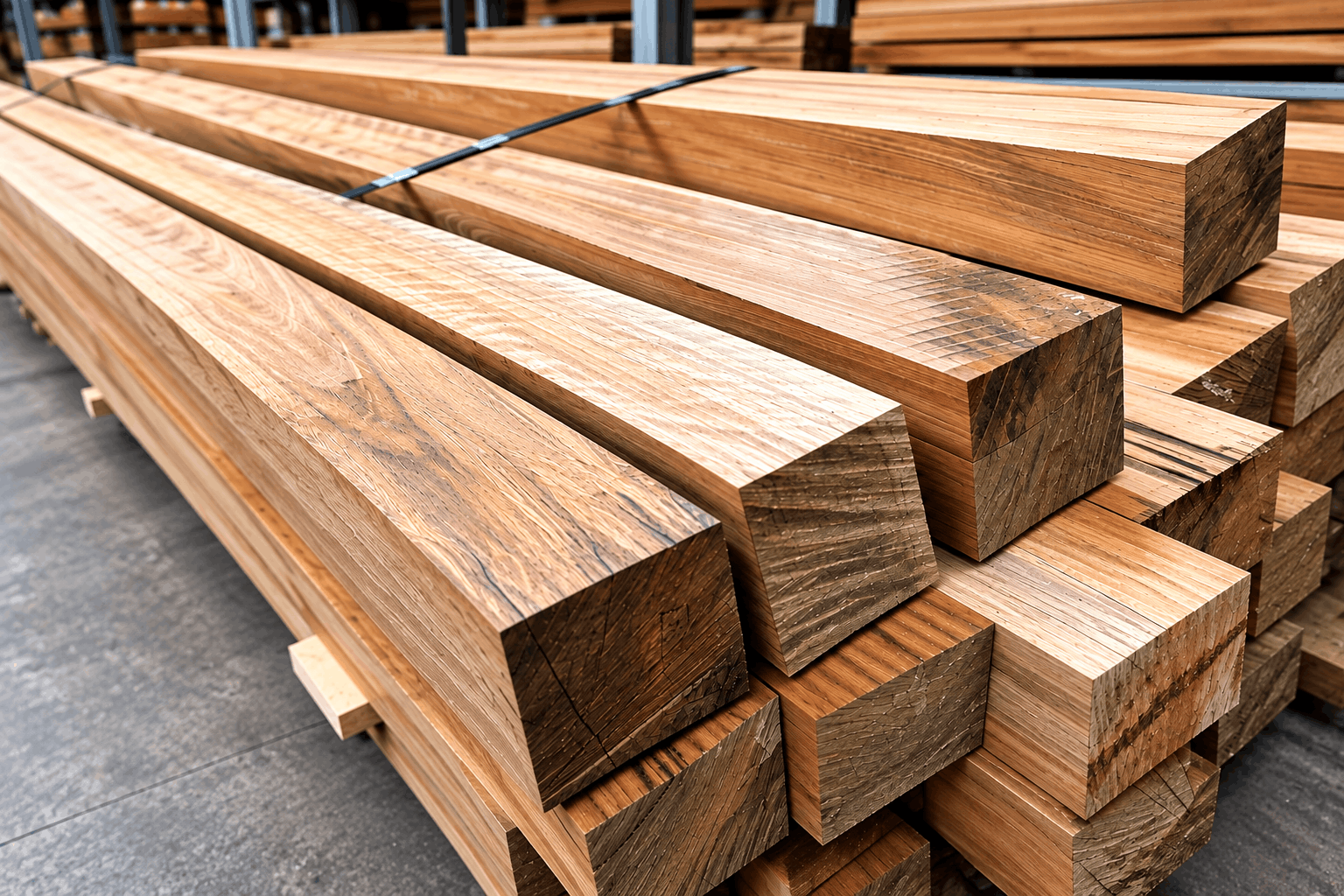
A rough sawn finish retains more of the character left by the sawing process. You’ll see and feel texture on the timber rather than the uniform surface you’d expect from a dressed-all-round product.
That can work particularly well on outdoor structures, rustic builds, landscaping projects and architectural work where the timber itself is meant to be visible.
It also changes expectations.
If your design calls for a completely smooth, furniture-like post, don’t order rough sawn timber assuming it will arrive looking dressed. Decide what finish the project actually needs before you buy.
For the right job, though, the texture is part of what makes rough sawn Spotted Gum posts visually interesting.
Five Sizes, and They Don’t Look Alike Once Installed
Melbourne Timber Supplies currently lists the following five post sections in this category: 100x100mm, 125x125mm, 150x150mm, 200x200mm and 250x250mm.
A difference of 50mm on paper can sound minor.
It isn’t once you’re looking at a square post.
A 100x100mm post has a completely different physical and visual presence from a 200x200mm section. Move up to 250x250mm and you’re dealing with a very substantial piece of hardwood.
The smaller sections may suit projects where a structural hardwood post is required without making the timber dominate the design. Larger sections are more likely to become architectural features in their own right.
Don’t pick a size based on appearance alone, however. Structural post dimensions should follow the plans, engineering and applicable project requirements.
If you need F14 structural hardwood posts, start there.
Where Are F14 Hardwood Posts Used?
There isn’t one standard project that accounts for every hardwood post sale.
Depending on the structural design and relevant specification, hardwood posts may be considered for pergolas, verandahs, outdoor structures, landscaping construction, entrances, feature structures and other building work.
Spotted Gum itself has a broad history of structural and exterior use. Other Australian suppliers similarly offer F14 rough sawn Spotted Gum for exposed applications including landscaping, external framing and fencing.
The actual suitability of a particular post still comes back to the job.
A post supporting a roof isn’t selected the same way as timber being used primarily as a visual landscape feature. Loads, spans, connections, exposure and footing details can all affect what is required.
That’s why an engineer’s specification beats guesswork every time.
Pergolas and Verandahs
Large hardwood posts make sense visually around outdoor living areas because the structure is usually exposed rather than hidden behind plaster.
A rough sawn post can bring some texture into a pergola or verandah, particularly when the project already uses natural timber elsewhere.
Size becomes important here.
Slim posts can look out of proportion under a broad roof, while oversized posts can overwhelm a smaller outdoor area. Before settling on a section, mark the proposed dimensions on site. Even a cardboard template around an existing post position can give you a better idea than staring at “200×200” on a plan.
For structural work, the final decision still needs to match the project documentation.
Customers searching for hardwood posts for pergolas Melbourne should therefore arrive with more than a photo of the backyard. Dimensions, drawings and required grade make the conversation much easier.
Hardwood Posts for Landscaping
Hardwood also works its way into landscape designs where strong visual lines are wanted.
Large posts can be used to frame entrances, define outdoor spaces or become part of purpose-built landscape structures where appropriate.
The rough sawn surface can be particularly effective here because it doesn’t look overly manufactured. Put it beside stone, exposed concrete, decking or other natural materials and the texture has somewhere to belong.
But exterior use needs to be considered properly.
Don’t assume that “hardwood” automatically means a post can be installed in any location or exposure condition without further thought. Confirm species, durability, treatment if applicable, installation method and whether the timber is suitable for the particular above-ground or in-ground situation.
That’s an important question to ask when buying structural hardwood posts Melbourne projects will expose to weather.
Building an Entrance or Feature Structure?
This is where the bigger sections start to become interesting.
A pair of 200x200mm or 250x250mm posts has enough visual weight to define an entrance before you add much else. Spotted Gum’s natural colour and grain can make the timber part of the architecture rather than something that needs to disappear behind paint.
Large-section Spotted Gum is also sold elsewhere in the Australian market for architectural structures, entranceways and substantial pergola work.
Before ordering large posts, think about handling.
Hardwood is dense. Bigger sections aren’t the sort of timber one person casually picks up and carries around the site.
Plan unloading, storage and installation before delivery arrives. It’s a small bit of preparation that becomes considerably more important as post dimensions increase.
Don’t Ignore Natural Timber Movement
Timber isn’t static.
Moisture changes can lead to movement as hardwood dries and settles into its environment. With large solid sections, natural checking, surface variation and changes over time shouldn’t automatically be treated as though the timber were a manufactured composite product.
This becomes particularly relevant with unseasoned structural hardwood.
Spotted Gum sold for comparable F14 rough sawn structural applications in Australia can be supplied unseasoned, and suppliers specifically note that drying occurs after installation.
Before using any post from this category, confirm the condition of the timber you’re actually purchasing rather than assuming every size is supplied identically.
If appearance is critical, discuss it before the order is finalised.
Choosing Between 100, 125, 150, 200 and 250mm
Start with the structural requirements.
Once those are established, appearance and proportions can help narrow the choice where the design allows flexibility.
100x100mm is the most compact section currently shown in the range. It gives you the character of solid rough sawn hardwood without the visual bulk of the larger posts.
125x125mm adds noticeable weight while remaining relatively restrained.
At 150x150mm, the post starts becoming a stronger architectural element. This size is commonly seen in the Australian market for pergolas, landscaping structures and exposed feature work.
200x200mm is substantial. You don’t need many of these in a design for the hardwood to become noticeable.
Then there’s 250x250mm. At a quarter of a metre across each face, this is a genuinely large post and should be selected with the scale of the entire structure in mind.
Measure Lengths Before You Order
Section size gets most of the attention, but length can create just as many problems on site.
Work from finished requirements and allow for the way the post will actually be installed. If part of the timber is going below a finished level, into a connection or through another structural detail, the visible height isn’t necessarily the length you need to order.
Don’t cut the calculation too fine.
And don’t assume every size will always be sitting in the yard in every possible length.
When you’re ready to order Spotted Gum posts Melbourne, check current size, species, length and availability with Melbourne Timber Supplies first.
For a multi-post project, it also makes sense to work out the entire order together rather than buying one post at a time.
Think About Fixings Before the Timber Arrives
Dense hardwood can demand a different approach from softwood.
Connections, bolts, brackets, holes and other fixing details should be planned around the structural design rather than improvised once the posts are standing on site.
Spotted Gum is a dense hardwood; Queensland Government data lists density around 1,010 kg/m³ at 12% moisture content.
That helps explain why handling and machining substantial sections deserves some preparation.
Use appropriate tools, fixings and installation methods for the project. For structural connections, follow the engineering and relevant construction requirements.
Buying good timber and then guessing the connection details doesn’t make much sense.
Buying F14 Hardwood Posts in Melbourne
The current Melbourne Timber Supplies range makes it possible to source F14 hardwood posts Melbourne projects need across several different section sizes without treating every job as though it needs the same post.
The category runs from 100x100mm through to a substantial 250x250mm section.
Before placing an order, have four things ready: required post size, required length, quantity and structural specification. If species is important, confirm whether you need Spotted Gum, Ironbark or another specified hardwood as well.
For builders ordering several posts, getting those details sorted at once makes quoting and delivery considerably simpler.
For homeowners, bringing the plans or structural notes is usually better than trying to remember what the builder said.
Shop Structural Hardwood Posts at Melbourne Timber Supplies
If you’re comparing Spotted Gum posts for sale Melbourne, don’t reduce the decision to price per post.
Check what you’re actually buying.
Look at structural grade, species, dimensions, finish, timber condition, required lengths and how the posts will be installed. Those details matter much more once construction begins.
Melbourne Timber Supplies currently offers five sizes within its Structural F14 Solid Rough Sawn Hardwood Posts category and services customers through locations listed at Deer Park, Pakenham, Geelong, Ballarat and Bendigo.
Whether you’re sourcing a 100x100mm post for a relatively compact structure or looking to buy rough sawn hardwood posts in one of the larger sections, work from the project requirements first.
Then measure again.
With hardwood this substantial, ordering the right post the first time is considerably easier than discovering the mistake after it’s been unloaded.